
Will Artificial General Intelligence (AGI) Arrive This Decade?
Introduction
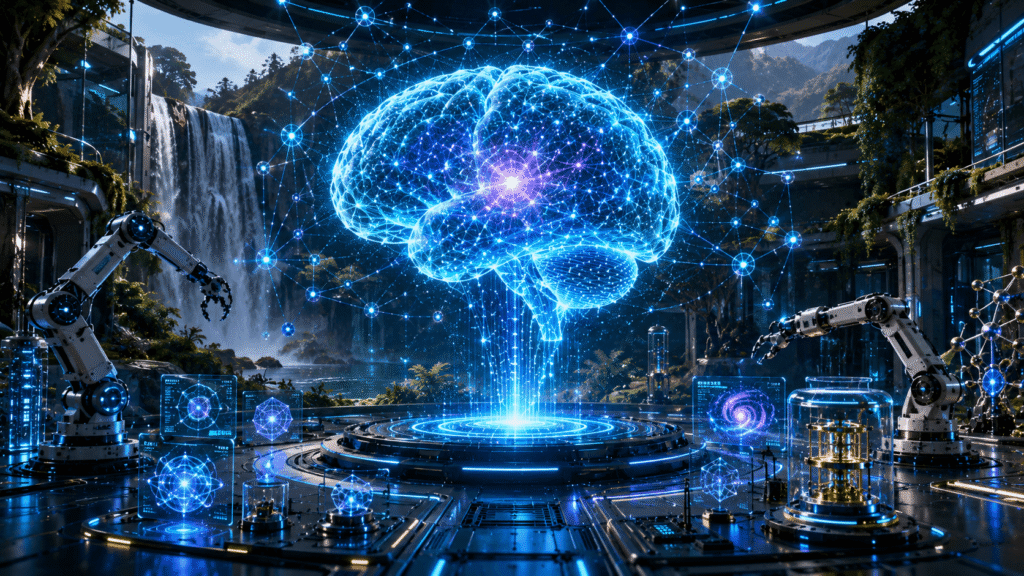
Artificial General Intelligence (AGI) is one of the most fascinating and debated topics in modern technology. While today’s artificial intelligence systems can perform specific tasks exceptionally well, AGI represents something far more advanced. It refers to a machine capable of understanding, learning, and solving problems across a wide range of domains at a level similar to human intelligence.
As AI technology continues to evolve at a rapid pace, many experts, businesses, and governments are asking the same question: Will Artificial General Intelligence arrive this decade? The answer could reshape industries, economies, education, healthcare, and society itself. Therefore, understanding AGI is becoming increasingly important for anyone interested in the future of technology.
Table of Contents
1. Introduction
2. Why AGI Matters
3. What Is Artificial General Intelligence?
4. AGI vs Traditional AI
5. Current Progress Toward AGI
6. Potential Benefits of AGI
7. Major Challenges and Risks
8. Could AGI Arrive This Decade?
9. Best Practices for Preparing for AGI
10. Common Misconceptions
11. AGI Readiness Checklist
12. Call to Action
13. FAQ
14. Conclusion
Why Artificial General Intelligence (AGI)Matters
Artificial General Intelligence (AGI) already impacts daily life through search engines, recommendation systems, virtual assistants, and business automation. However, AGI could have a much larger impact.
Unlike current AI systems that specialize in specific tasks, AGI would be capable of learning new skills without extensive retraining. Consequently, it could adapt to changing situations much like a human.
Several reasons explain why AGI matters:
- It could revolutionize scientific research.
- It may accelerate medical discoveries.
- Businesses could achieve unprecedented productivity.
- Education systems might become highly personalized.
- Global challenges could be solved more efficiently.
As a result, governments, researchers, and technology companies are investing heavily in advanced AI development.
What Is Artificial General Intelligence (AGI)?
Artificial General Intelligence refers to an AI system that possesses broad cognitive abilities similar to those of humans.
Today’s AI models excel at narrow tasks. For example, one system may generate text while another identifies images. However, AGI would be capable of performing many different tasks using the same intelligence framework.
Key Characteristics of Artificial General Intelligence (AGI)
A true AGI system would likely demonstrate:
- Reasoning across multiple domains
- Learning new skills independently
- Adapting to unfamiliar situations
- Solving complex problems
- Understanding context deeply
- Applying knowledge from one field to another
These capabilities distinguish AGI from traditional AI applications.
Why Artificial General Intelligence (AGI)Is Different
Current AI systems are powerful but specialized. They operate within specific boundaries and often require large amounts of training data.
AGI, on the other hand, would be more flexible and adaptable. Therefore, many researchers view AGI as the next major milestone in artificial intelligence.
Lorem ipsum dolor sit amet, consectetur adipiscing elit. Ut elit tellus, luctus nec ullamcorper mattis, pulvinar dapibus leo.
Artificial General Intelligence (AGI)vs Traditional Artificial Intelligence
Understanding the difference between AGI and existing AI helps clarify the discussion.
Narrow AI
Most AI tools today fall into the category of narrow AI.
Examples include:
- Chatbots
- Recommendation engines
- Voice assistants
- Fraud detection systems
- Image recognition software
These systems perform specific functions effectively but cannot easily transfer knowledge between unrelated tasks.
Artificial General Intelligence (AGI)
AGI would possess broader capabilities.
For example, an AGI system might:
- Learn a new language
- Analyze financial markets
- Conduct scientific research
- Write software
- Solve engineering problems
All without requiring separate specialized models.
Consequently, Artificial General Intelligence (AGI)would represent a significant leap beyond current technology.
Current Progress Toward Artificial General Intelligence (AGI)
The AI industry has made remarkable progress in recent years.
Large language models, multimodal systems, and AI agents have demonstrated capabilities that were once considered impossible.
Advances Driving Progress
Several technologies are accelerating AI development:
- Deep learning
- Large-scale computing infrastructure
- Reinforcement learning
- Neural networks
- Advanced AI agents
- Massive datasets
Growing Industry Investment
Technology companies are investing billions of dollars into AI research.
At the same time, universities and governments continue supporting AI innovation initiatives.
Consequently, progress is occurring faster than many experts predicted just a few years ago.
Breakthroughs in Reasoning
Modern AI systems can now:
- Generate human-like text
- Analyze images
- Write code
- Solve complex problems
- Conduct research tasks
Although these achievements are impressive, they do not necessarily indicate that AGI has been achieved
Potential Benefits of Artificial General Intelligence (AGI)
If Artificial General Intelligence (AGI) becomes reality, society could experience significant benefits.
Accelerated Scientific Discovery
AGI could help researchers analyze enormous datasets and generate new hypotheses.
As a result, breakthroughs in medicine, energy, and materials science may occur more rapidly.
Healthcare Transformation
Healthcare systems could benefit from:
- Faster diagnostics
- Drug discovery
- Personalized treatments
- Improved patient outcomes
Economic Growth
Businesses may use AGI to improve productivity and innovation.
Consequently, organizations could develop new products and services more efficiently.
Education Improvements
AGI-powered educational systems might provide personalized learning experiences tailored to individual students.
Solving Global Challenges
Complex issues such as climate change, food security, and energy management may become easier to address with advanced intelligence systems.
Major Challenges and Risks of Artificial General Intelligence (AGI)
While Artificial General Intelligence (AGI)offers exciting opportunities, it also raises important concerns.
Technical Challenges
Researchers still face several obstacles:
- Long-term planning
- Common-sense reasoning
- Reliable decision-making
- Efficient learning
- Safety alignment
Therefore, significant technical work remains.
Ethical Concerns
AGI development raises questions about:
- Privacy
- Transparency
- Accountability
- Bias
- Fairness
Organizations must address these issues responsibly.
Economic Disruption
Some jobs may change significantly as advanced AI systems become more capable.
However, history suggests that technological innovation often creates new opportunities alongside disruption.
Governance and Regulation
Governments worldwide are exploring frameworks for managing advanced AI technologies.
Could Artificial General Intelligence (AGI) Arrive This Decade?
This is the question attracting the most attention.
The reality is that experts remain divided.
Arguments Supporting Artificial General Intelligence (AGI)This Decade
Some researchers believe AGI could emerge before 2030 because:
- Computing power continues growing.
- AI capabilities improve rapidly.
- Investment levels remain extremely high.
- AI models become increasingly sophisticated.
Consequently, supporters argue that AGI may be closer than many people realize.
Arguments Against Artificial General Intelligence (AGI)This Decade
Other experts remain cautious.
They argue that:
- Human intelligence is extraordinarily complex.
- Current AI still lacks deep understanding.
- Major scientific breakthroughs may still be required.
- Safety challenges remain unresolved.
Therefore, AGI could take much longer than optimistic forecasts suggest.
A Balanced Perspective
A reasonable view is that AGI remains uncertain.
While rapid progress is undeniable, predicting exact timelines is difficult. Nevertheless, organizations should monitor developments closely because the impact could be profound
Best Practices for Preparing for an Artificial General Intelligence (AGI)Future
LoremBusinesses and professionals can take practical steps today.
Step 1: Build AI Literacy
Understanding AI fundamentals will become increasingly valuable.
Step 2: Invest in Digital Skills
Skills such as data analysis, critical thinking, and problem-solving remain highly relevant.
Step 3: Follow Industry Developments
Stay informed about emerging technologies and regulatory changes.
Step 4: Prioritize Human Strengths
Creativity, leadership, communication, and emotional intelligence continue to offer significant advantages.
Step 5: Develop Responsible AI Policies
Organizations should establish clear governance frameworks for AI adoption.
ipsum dolor sit amet, consectetur adipiscing elit. Ut elit tellus, luctus nec ullamcorper mattis, pulvinar dapibus leo.
Common Misconceptions About AGI
Several myths create confusion.
Myth 1: AGI Already Exists
Current AI systems are impressive, but most experts agree that AGI has not yet been achieved.
Myth 2: AGI Will Instantly Replace All Jobs
Technology generally transforms jobs rather than eliminating all employment opportunities.
Myth 3: AGI Is Only Relevant to Technology Companies
Healthcare, education, finance, manufacturing, and government sectors could all be affected.
Myth 4: AGI Development Is Guaranteed
There is no certainty regarding when or even if AGI will emerge.
AGI Readiness Checklist
Before preparing for future AI advancements, consider the following:
✔️ Understand AI fundamentals
✔️ Monitor industry trends
✔️ Develop digital skills
✔️ Strengthen cybersecurity practices
✔️ Explore AI tools responsibly
✔️ Create governance policies
✔️ Evaluate workforce needs
✔️ Encourage continuous learning
✔️ Invest in innovation
✔️ Stay informed about regulations
Ready to Explore the Future of AI?
The conversation around AGI is only beginning. Businesses, students, researchers, and technology enthusiasts who stay informed today will be better prepared for tomorrow’s opportunities.
Call to Action
Want expert insights into artificial intelligence, robotics, quantum computing, and emerging technologies?
Visit Future Science AI regularly for in-depth articles, practical guides, and future-focused analysis. Contact us today to learn how technological innovation could impact your industry, business, or career.
Frequently Asked Questions (FAQ)
Q1: What is Artificial General Intelligence (AGI)?
Artificial General Intelligence (AGI) is a theoretical form of AI capable of understanding, learning, and performing a wide variety of tasks at human-like levels.
Q2: Has Artificial General Intelligence (AGI)been achieved yet?
No. Current AI systems are highly capable but remain specialized rather than truly general-purpose.
Q3: Will Artificial General Intelligence (AGI)arrive before 2030?
Experts disagree. Some believe Artificial General Intelligence (AGI)could emerge this decade, while others think it may require much more time.
Q4: How could Artificial General Intelligence (AGI)impact jobs?
AGI may automate certain tasks while creating new opportunities in technology, management, research, and innovation.
Q5: Why is Artificial General Intelligence (AGI)important?
AGI could transform healthcare, education, scientific discovery, business operations, and many other sectors.
Conclusion
Artificial General Intelligence (AGI) represents one of the most ambitious goals in technology. Although remarkable progress has been made in artificial intelligence, the timeline for achieving AGI remains uncertain.
Nevertheless, the possibility that AGI could arrive this decade continues to drive research, investment, and public interest. Whether AGI emerges before 2030 or much later, its potential impact on society, business, healthcare, and innovation is difficult to ignore.
For that reason, individuals and organizations should stay informed, develop relevant skills, and prepare for a future in which advanced AI systems play an increasingly important role in everyday life.