
How AI Agents Are Changing the Way We Work
Introduction
AI Agents are rapidly transforming modern workplaces. From handling repetitive tasks to assisting with complex decision-making, these intelligent systems are helping businesses operate more efficiently than ever before. As organizations across the USA, Canada, Europe, and the UK embrace artificial intelligence, AI agents are becoming valuable digital coworkers rather than simple software tools.
Moreover, businesses of all sizes are discovering new ways to improve productivity, reduce operational costs, and enhance customer experiences through AI-powered automation. Consequently, understanding how AI agents work and how they are reshaping industries has become essential for professionals, entrepreneurs, marketers, and decision-makers alike.
Table of Contents
1. Introduction
2. Why AI Agents Matter
3. What Are AI Agents?
4. How AI Agents Are Changing Workplaces
5. Key Benefits of AI Agents
6. Best Practices for AI Agent Adoption
7. Common Mistakes to Avoid
8. AI Agent Readiness Checklist
9. Call to Action
10. Frequently Asked Questions
11. Conclusion
Why AI Agents Matter in Today's Workplace
The workplace is evolving rapidly. Organizations face increasing pressure to improve efficiency, manage growing workloads, and meet customer expectations.
Traditionally, employees spent countless hours on repetitive administrative tasks. However, AI agents can now automate many of these responsibilities while allowing employees to focus on strategic and creative work.
Several factors are driving adoption:
- Increased demand for productivity
- Rising labor costs
- Remote and hybrid work environments
- Advances in generative AI
- Growing data volumes
- Customer expectations for faster service
As a result, businesses are actively investing in AI-powered solutions that help teams accomplish more with fewer manual procesing
What Are AI Agents?
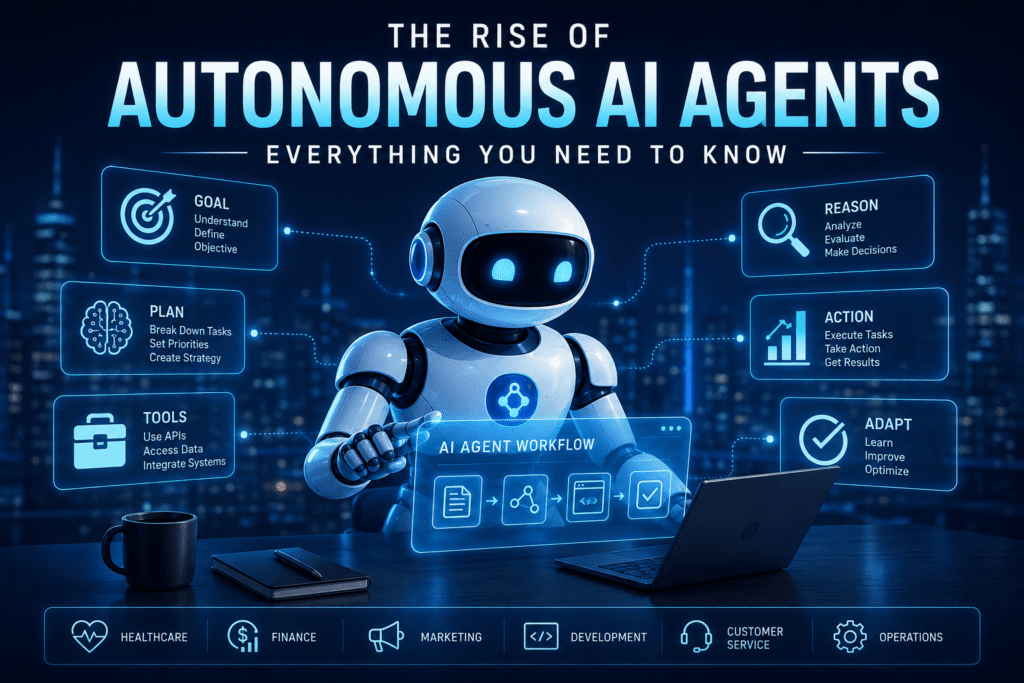
AI agents are intelligent software systems that can perform tasks, make decisions, learn from information, and interact with users with minimal human intervention.
Unlike traditional automation tools, AI agents can understand context, adapt to changing situations, and execute multi-step workflows.
How AI Agents Work
Most AI agents combine:
- Artificial intelligence Machine learning
- Natural language processing
- Data analysis
- Workflow automation
Together, these technologies allow AI agents to process information, identify patterns, and generate useful responses.
For example, an AI customer support agent can answer questions, access company databases, recommend solutions, and escalate issues when necessary.
AI Agents vs Traditional Automation
Traditional automation follows predefined rules. In contrast, AI agents can analyze situations and adjust their actions based on new information.
Therefore, AI agents provide greater flexibility and intelligence compared to older automation systems.
How AI Agents Are Changing the Way We Work
AI agents are influencing nearly every industry.
AI Agents Improving Workplace Productivity
One of the most significant impacts involves productivity improvements.
AI agents can:
- Schedule meetings
- Draft emails
- Organize documents
- Summarize reports
- Generate content
- Conduct research
Consequently, employees spend less time on repetitive tasks and more time on high-value activities.
AI Agents Transforming Customer Service
Customer service departments increasingly rely on AI agents.
Modern AI systems can:
- Answer customer questions
- Process requests
- Track orders
- Provide personalized recommendations
- Offer 24/7 support
As a result, businesses improve customer satisfaction while reducing support costs.
AI AgentsSupporting Marketing Teams
Marketing professionals use AI agents to streamline campaigns.
Examples include:
- Content generation
- Keyword research
- Audience analysis
- Email marketing
- Social media planning
- Performance reporting
Additionally, AI agents help marketers make data-driven decisions faster.
AI AgentsEnhancing Human Resources
HR teams use AI agents for:
- Resume screening
- Candidate matching
- Employee onboarding
- Training recommendations
- Performance analysis
Therefore, recruitment processes become more efficient and scalable.
Assisting Business Leaders
Executives increasingly rely on AI agents for insights.
AI can analyze:
- Sales trends
- Market conditions
- Customer behavior
- Financial performance
- Operational efficiency
As a result, decision-makers gain valuable intelligence that supports strategic planning.
Industries Being Transformed by AI Agents
The influence of AI agents extends far beyond technology companies.
Healthcare
Healthcare organizations use AI agents to assist with:
- Appointment scheduling
- Medical documentation
- Patient communication
- Administrative workflows
Finance
Financial institutions leverage AI agents for:
- Fraud detection
- Customer support
- Risk analysis
- Investment insights
Retail and E-Commerce
Retail businesses use AI agents to:
- Personalize shopping experiences
- Optimize inventory
- Improve customer service
- Analyze purchasing behavior
Manufacturing
Manufacturers benefit from AI agents that:
- Monitor production
- Predict equipment failures
- Improve quality control
- Reduce downtime
Education
Educational institutions use AI-powered systems to support:
- Personalized learning
- Student engagement
- Administrative efficiency
- Academic assistance
Benefits of AI Agents for Businesses and Professionals
AI Agents Increased Efficiency
AI agents perform routine tasks consistently and quickly.
Consequently, businesses achieve higher productivity without increasing workloads.
AI AgentsCost Reduction
Automation reduces manual labor requirements and operational expenses.
Therefore, organizations can allocate resources more effectively.
AI Agents Better Decision-Making
AI agents process large amounts of information rapidly.
As a result, leaders receive actionable insights that support informed decisions.
AI Agents Improved Customer Experience
Fast response times and personalized interactions help businesses strengthen customer relationships.
AI Agents Scalability
AI agents can handle increasing workloads without requiring significant staffing increases.
Consequently, businesses can grow more efficiently.
Best Practices for Implementing AI Agents
Step 1: Define Clear Objectives
Organizations should identify specific goals before deploying AI agents.
Examples include:
- Reducing support tickets
- Improving productivity
- Automating reporting
- Enhancing customer service
Step 2: Start Small
Pilot projects often deliver better results than large-scale deployments.
Therefore, businesses can evaluate effectiveness before expanding.
Step 3: Train Employees
Employees should understand how AI agents work and how to collaborate with them effectively.
Step 4: Monitor Performance
Track key metrics such as:
- Productivity gains
- Customer satisfaction
- Cost savings
- Response times
Step 5: Maintain Data Security
Strong security measures are essential for protecting sensitive information.
Common Mistakes to Avoid In AI Agents
Many organizations encounter avoidable challenges.
Expecting AI to Replace Everyone
AI agents work best when supporting human employees rather than replacing them entirely.
Ignoring Data Quality
Poor-quality data leads to inaccurate outputs.
Therefore, organizations should prioritize data management.
Overlooking Employee Adoption
Employees must understand the benefits of AI systems.
Without buy-in, adoption rates may suffer.
Failing to Set Clear Goals
Businesses should focus on measurable outcomes instead of implementing AI simply because it is trendy.
Neglecting Compliance Requirements
Organizations must ensure compliance with privacy regulations and industry standards.
AI Agent Readiness Checklist
Before implementing AI agents, consider the following checklist:
✔️ Identify business objectives
✔️ Assess current workflows
✔️ Determine automation opportunities
✔️ Evaluate available data
✔️ Train employees
✔️ Establish security measures
✔️ Monitor performance metrics
✔️ Create governance policies
✔️ Measure return on investment
✔️ Plan future scalability
The Future of AI Agents
AI agents are becoming increasingly sophisticated.
Future developments may include:
- Advanced reasoning capabilities
- Better collaboration with humans
- Autonomous project management
- Personalized business assistants
- Industry-specific AI experts
Furthermore, organizations that adopt AI thoughtfully today will be better prepared for tomorrow’s competitive landscape.
As technology evolves, AI agents will likely become an essential component of everyday work.
Ready to Embrace AI-Powered Productivity?
Businesses that understand and adopt AI agents early can unlock significant advantages in efficiency, innovation, and customer experience.
Call to Action
Want to stay ahead of emerging AI trends and future technologies?
Visit Future Science AI regularly for expert insights, practical guides, and in-depth analysis of artificial intelligence, robotics, quantum computing, and innovation. Contact us today to learn how future technologies can help transform your business and career.
Frequently Asked Questions (FAQ)
Q1: What are AI agents?
AI agents are intelligent software systems that can perform tasks, make decisions, and automate workflows with minimal human intervention.
Q2: How are AI agents changing the workplace?
AI agents improve productivity, automate repetitive tasks, support decision-making, and enhance customer service across many industries.
Q3: Can AI agents replace human workers?
Most AI agents are designed to assist employees rather than replace them. Human creativity, leadership, and critical thinking remain essential.
Q4: Which industries benefit most from AI agents?
Healthcare, finance, retail, education, manufacturing, and customer service are among the industries benefiting significantly from AI agent adoption.
Q5: Are AI agents secure?
AI agents can be secure when organizations implement strong cybersecurity measures, governance policies, and data protection practices.
Conclusion
AI Agents are fundamentally changing the way we work. By automating routine tasks, supporting better decisions, and enhancing productivity, these intelligent systems are helping organizations become more efficient and competitive.
Moreover, AI agents are creating new opportunities for professionals, entrepreneurs, and businesses across the USA, Canada, Europe, and the UK. As adoption continues to grow, organizations that embrace AI responsibly will be better positioned to succeed in an increasingly digital future.
The future of work is not about humans versus AI. Instead, it is about humans and AI working together to achieve better outcomes, greater innovation, and long-term success.