AI Tutors vs Human Teachers: What Is the Difference?
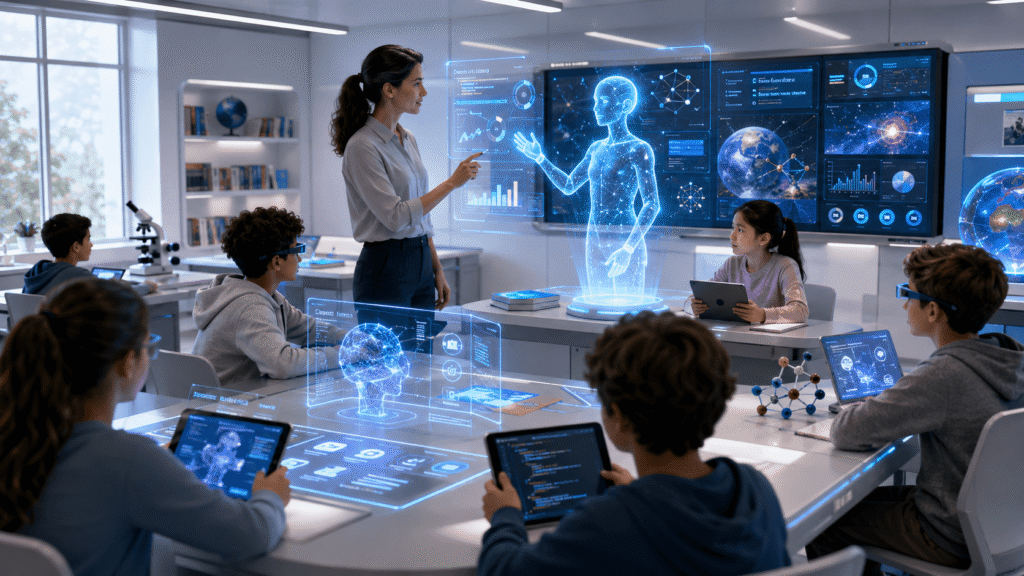
Artificial intelligence is changing education faster than many schools, universities, businesses, and families expected. AI-powered chatbots, adaptive learning platforms, virtual assistants, and personalized tutoring systems can now explain concepts, answer questions, generate practice exercises, and provide feedback within seconds.
However, this rapid change has created an important question: AI Tutors vs human teachers—what is the real difference, and which approach is better for learning?
The answer is more complex than choosing one over the other.
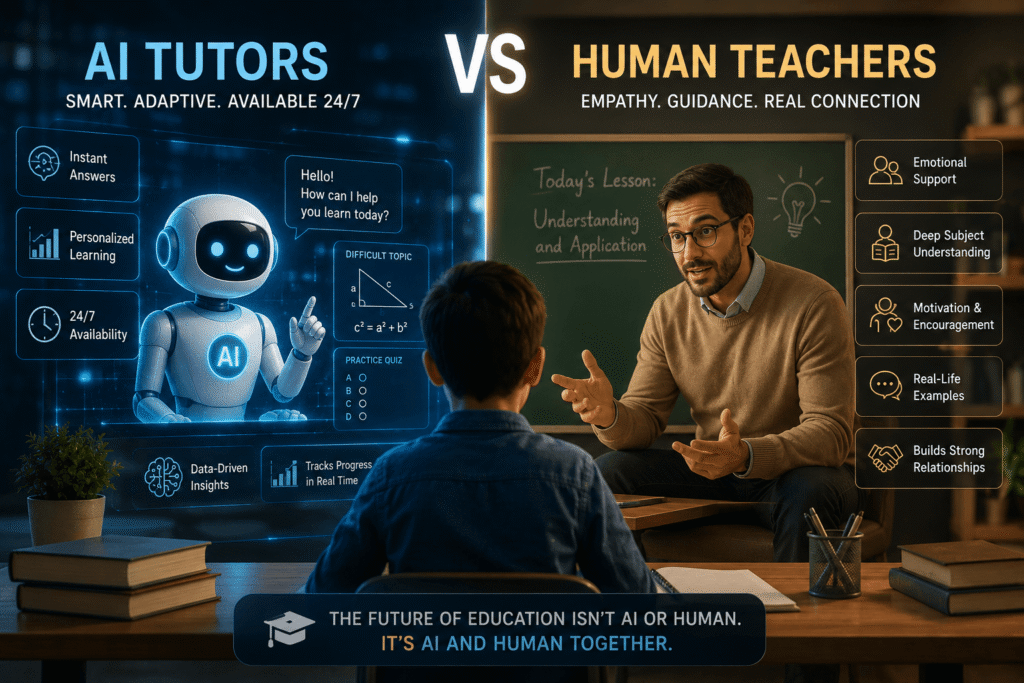
AI tutors can offer instant availability, personalized practice, and scalable support. Human teachers, on the other hand, bring emotional intelligence, professional judgment, motivation, social interaction, and an understanding of students that technology cannot fully replicate.
The future of education may not be about replacing teachers with machines. Instead, it may be about finding the right balance between intelligent technology and human expertise.
In this guide, we compare AI tutors and human teachers, explore their strengths and limitations, and explain how students and educational institutions can use both more effectively.
Table of Contents
1. Why AI Tutors vs Human Teachers Matters
2. What Is an AI Tutor?
3. What Is the Role of a Human Teacher?
4. AI Tutors vs Human Teachers: Key Differences
5. Benefits of AI Tutors
6. Benefits of Human Teachers
7. Can AI Replace Human Teachers?
8. How to Combine AI and Human Teaching
9. Common Mistakes to Avoid
10. Practical Checklist
11. The Future of AI-Powered Education
12. Frequently Asked Questions
13. Conclusion
Why AI Tutors vs Human Teachers Matters
Education has always evolved alongside technology.
Books, calculators, computers, search engines, online learning platforms, and smartphones have all changed how people access information. AI, however, introduces something different. It can interact with learners in natural language and adapt responses based on the student’s questions and progress.
That creates exciting possibilities.
A student struggling with mathematics can ask for an explanation at midnight. A language learner can practice conversations repeatedly. A professional can request a personalized learning plan for a new skill.
At the same time, education is not simply the transfer of information.
Students also need encouragement, discipline, feedback, social interaction, critical thinking, and guidance. These areas reveal why the debate around AI tutors and human teachers is so important.
Recent education research and policy discussions increasingly focus on using AI to strengthen learning rather than allowing students to outsource learning itself.
What Is an AI Tutor?
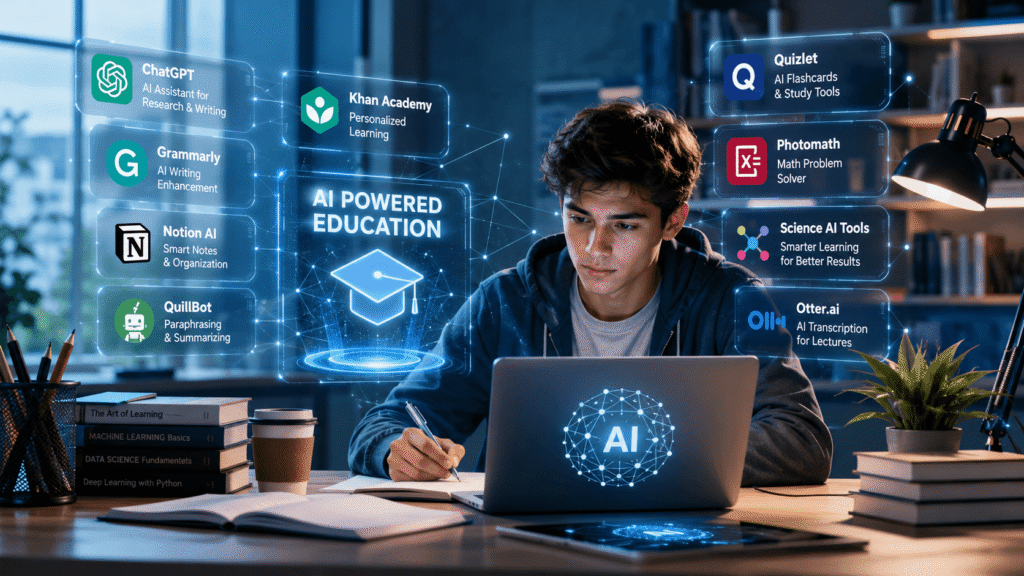
https://futurescienceai.com/blog/ai-in-education/ai-tools-every-student-should-know/
An AI Tutors is a software system that uses artificial intelligence to support learning.
Depending on the platform, an AI Tutorsmay be able to:
- Answer questions
- Explain difficult concepts
- Create quizzes
- Generate practice exercises
- Adapt content to different skill levels
- Provide instant feedback
- Translate information
- Create study plans
- Summarize learning materials
- Support personalized learning
For example, imagine a student who does not understand a science concept.
Instead of simply searching through multiple websites, the student could ask an AI Tutors to explain the topic in simple language. If the first explanation is too complicated, the student can ask for an easier example.
The AI can then adjust its response.
This level of instant interaction is one of the biggest advantages of AI-powered learning.
However, an AI Tutors does not automatically understand a student’s complete personal situation. Its responses may also contain errors, missing context, or inaccurate information.
Therefore, AI Tutors works best when learners remain active and critical.
What Is the Role of a Human Teacher?
A human teacher does much more than deliver information.
Effective teachers assess understanding, adapt lessons, manage classrooms, recognize emotional challenges, encourage participation, and build relationships with students.
A teacher may notice that a student is unusually quiet, frustrated, distracted, or lacking confidence.
An AI system may detect some learning patterns, but it does not experience empathy or understand human relationships in the same way.
Human teachers can also make professional judgments based on context.
For example, two students may receive the same low score for completely different reasons. One may not understand the material. Another may understand it but be dealing with stress, language barriers, or personal challenges.
A skilled teacher can investigate these differences.
This human understanding remains one of the strongest advantages of traditional teaching.
AI Tutors vs Human Teachers: The Key Differences
https://southlondoncollege.org/ai-tutors-vs-human-tutors/
The simplest way to understand AI Tutorsvs human teachers is to compare what each does best.
1. Availability
AI Tutors
AI Tutors can be available 24 hours a day.
Students can ask questions outside school hours and receive immediate responses.
This is particularly useful for:
- Independent learners
- University students
- Remote workers
- Adult learners
- Students preparing for exams
Human Teachers
Human teachers have limited availability.
However, limited availability does not mean limited value. A teacher can provide meaningful interaction, mentoring, and guidance that goes beyond answering a question.
Winner for availability: AI tutors.
2. Personalization
AI Tutors
AI can quickly adjust explanations and practice material.
For example, one learner may need a beginner-level explanation while another needs advanced examples.
Adaptive learning systems can potentially provide different learning paths based on performance.
Human Teachers
Human teachers personalize learning through observation and experience.
They can consider factors that may not appear in data, including motivation, confidence, social circumstances, and classroom dynamics.
Best approach: A combination of AI personalization and human judgment.
3. Emotional Support
This is one of the clearest differences between AI Tutors and human teachers.
An AI system can generate supportive language, but it does not genuinely experience empathy.
A teacher can build trust over time and understand the emotional environment of a classroom.
Human relationships can also influence motivation and confidence.
A student who believes in their teacher may be more willing to take academic risks, ask questions, and recover from failure.
Winner for emotional intelligence: Human teachers.
4. Speed of Feedback
AI can provide feedback almost instantly.
For repetitive exercises, this can save significant time.
For example, an AI-powered learning tool may quickly identify common mistakes in practice questions and suggest areas for improvement.
Human feedback may take longer, particularly when teachers are responsible for large groups of students.
However, human feedback can offer deeper context.
A teacher may explain why a student is struggling and provide guidance based on a broader understanding of their learning journey.
Winner for speed: AI Tutors
Winner for contextual feedback: Human teachers.
5. Accuracy and Reliability
AI can process information quickly, but speed does not guarantee accuracy.
Generative AI systems can produce incorrect answers or present uncertain information with confidence.
This is why students should not automatically trust every response.
Human teachers can also make mistakes. However, qualified educators bring subject expertise, professional training, and accountability to the learning process.
The strongest approach is to encourage verification from reliable sources.
6. Scalability
AI Tutors can support large numbers of users simultaneously.
This makes AI attractive for online education platforms and organizations trying to provide additional learning support at scale.
A single AI system may help thousands or even millions of learners.
Human teachers cannot scale in the same way.
However, this limitation is also connected to their strength: teachers can build meaningful relationships with students.
Winner for scalability: AI Tutors
Benefits of AI Tutors
AI Tutors can offer important advantages when used responsibly.
Personalized Learning at Scale
Traditional classrooms often include students with different abilities and learning speeds.
AI can provide additional practice based on an individual’s needs.
A student who understands a topic quickly can move forward, while another can receive additional explanations.
Instant Support
Students do not always learn between 9 a.m. and 3 p.m.
AI Tutors can provide support during evenings, weekends, and independent study sessions.
Reduced Repetitive Work
AI can help generate practice questions, summaries, study plans, and basic feedback.
This can support both students and teachers.
Accessibility Support
AI can assist with translation, text simplification, speech recognition, and other accessibility features.
These capabilities may help make educational content more accessible when designed and used appropriately.
Benefits of Human Teachers
Despite rapid AI development, human teachers offer strengths that remain essential.
Motivation and Mentoring
A good teacher can inspire students.
They can encourage learners who lack confidence and challenge students who underestimate their abilities.
Social Learning
Education is also a social experience.
Students learn through discussion, teamwork, debate, and interaction with others.
Human teachers help create and manage these learning environments.
Ethical and Professional Judgment
Teachers make decisions that involve context.
They can decide when a student needs additional support, when a teaching method is failing, or when technology is not the right solution.
Building Critical Thinking
A teacher can challenge assumptions and encourage students to defend their ideas.
This is particularly important in an AI-driven world where information can be generated instantly.
Students need to learn not only how to find answers, but also how to question them.
Can AI Replace Human Teachers?
The short answer is: AI can replace certain teaching tasks, but it is unlikely to replace the full role of a human teacher.
AI is particularly effective at:
- Providing routine explanations
- Creating practice exercises
- Supporting personalized revision
- Automating repetitive administrative tasks
- Generating learning resources
- Offering instant assistance
Human teachers remain especially important for:
- Emotional support
- Mentoring
- Classroom management
- Complex professional judgment
- Social learning
- Motivation
- Safeguarding
- Ethical decision-making
The goal should therefore be augmentation rather than simple replacement.
AI can potentially handle repetitive tasks and provide additional support, allowing teachers to spend more time on activities where human expertise matters most
How to Combine AI Tutors and Human Teaching
The most effective future model may be a hybrid learning approach.
Here is a practical step-by-step strategy.
Step 1: Define the Learning Goal
Start with the educational objective.
Do not use AI simply because it is available.
Ask:
- What should students learn?
- What skills should they develop?
- Where could technology provide genuine support?
Step 2: Use AI for Repetitive Support
AI can help with:
- Practice questions
- Revision
- Basic explanations
- Brainstorming
- Personalized exercises
This can free up time for deeper learning activities.
Step 3: Keep Human Oversight
Teachers should review how AI tools are being used.
Students should also understand that AI can make mistakes.
Important educational decisions should not depend entirely on automated systems.
Step 4: Teach AI Literacy
Students need to understand:
- How AI generates responses
- Why AI can be wrong
- How bias can affect systems
- How to verify information
- How to protect personal data
- When AI assistance becomes inappropriate
Step 5: Measure Learning, Not Just Output
A student producing a good answer with AI does not automatically mean the student understands the topic.
Ask learners to explain their reasoning, complete independent work, discuss concepts, and demonstrate understanding in different ways
Common Mistakes to Avoid
Treating AI as an Answer Machine
Students can become dependent on instant answers.
Instead, AI should encourage exploration and understanding.
A better prompt might be:
Do not give me the answer immediately. Help me understand the steps.
Ignoring AI Errors
Always verify important facts, statistics, references, and calculations.
Replacing All Human Interaction
Technology should not eliminate discussion, mentoring, collaboration, and social learning.
Using AI Without Privacy Considerations
Schools, universities, and organizations should understand what information an AI system collects and how that data is managed.
Measuring Success Only by Speed
Faster answers do not always mean better learning.
The goal is understanding, retention, and the ability to apply knowledge.
Practical Checklist for Using AI Tutors
Before introducing an AI Tutors, use this checklist:
- Define the learning objective first.
- Choose an AI tool appropriate for the learner’s age and needs.
- Review privacy and data policies.
- Avoid entering unnecessary personal or confidential information.
- Teach students to verify AI-generated information.
- Encourage students to think before accepting an answer.
- Use AI to support practice rather than replace learning.
- Maintain teacher or expert oversight where appropriate.
- Evaluate whether the tool improves actual understanding.
- Review the AI tool regularly as technology and policies change.
The Future of AI-Powered Education
AI is likely to become more deeply integrated into education.
Future systems may provide increasingly personalized learning experiences, adapt explanations in real time, and help teachers manage administrative workloads.
However, successful adoption will depend on more than technical capability.
Schools and educational organizations will need clear policies around privacy, safety, equity, academic integrity, and responsible use.
The role of teachers may also evolve.
Rather than spending as much time on repetitive tasks, teachers may increasingly focus on mentoring, discussion, problem-solving, creativity, and helping students develop critical thinking.
In other words, AI could change what teachers spend time doing without removing the need for teachers.
Current OECD work also emphasizes a key distinction: strong performance with AI does not automatically equal genuine learning. Educational design and teaching principles still matter
CTA: Explore the Future of AI and Education
AI is transforming how people learn, but understanding the technology is becoming just as important as using it.
Whether you are a student, educator, parent, business owner, or decision-maker, learning how to use AI responsibly can help you benefit from new technology without losing the human skills that matter most.
Explore more expert guides on artificial intelligence, education, science, space, quantum technology, and the fu
Frequently Asked Questions
1. Are AI Tutors better than human teachers?
AI Tutors are better for certain tasks, such as instant feedback, 24/7 availability, and personalized practice. Human teachers are better at emotional support, mentoring, social learning, and complex professional judgment. A combination of both may provide the strongest learning experience.
2. Can AI Tutors replace teachers?
AI Tutors can automate and support some teaching tasks, but they cannot fully replace the broader role of human teachers. Teachers provide motivation, relationships, context, classroom leadership, and human judgment that AI cannot fully reproduce.
3. What are the main benefits of AI Tutors?
AI Tutors can provide instant assistance, personalized learning, flexible access, practice exercises, and support for independent learning. They may also help educators reduce repetitive tasks.
4. What are the disadvantages of AI Tutors?
AI Tutors can provide inaccurate information, lack genuine empathy, create privacy concerns, and encourage over reliance if students use them without guidance. They should not replace critical thinking or human oversight.
5. What is the best approach to AI in education?
The best approach is usually to use AI as a supportive tool rather than a complete replacement for teachers. AI can handle repetitive tasks and personalized practice, while human teachers provide mentoring, judgment, motivation, and social learning.
Conclusion
The debate around AI Tutors vs human teachers should not be treated as a simple competition.
AI Tutors offer speed, availability, personalization, and scalable support. Human teachers provide empathy, mentorship, context, accountability, and the ability to build meaningful learning relationships.
Both have important strengths.
The real opportunity lies in combining them thoughtfully.
AI can help students practice, explore ideas, and receive immediate support. Meanwhile, teachers can focus more of their expertise on guiding, motivating, challenging, and supporting learners.
As artificial intelligence continues to evolve, education will also need to evolve. However, the most successful future is unlikely to be one where technology simply replaces people.
Instead, AI Tutors vs human teachers may become a partnership where intelligent technology supports the learning process while human educators continue to provide the guidance and connection that education needs.
The future of learning should not be about choosing between AI and teachers.
It should be about using the strengths of both to help more people learn effectively, responsibly, and confidently.