
AI Tools Every Student Should Know in 2026
Artificial intelligence is changing the way students learn, research, write, and prepare for exams. Today, AI Tools Every Student Should Know are no longer optional—they have become valuable learning companions that help students save time, improve understanding, and stay organized.
Whether you’re a high school student, college learner, or university researcher, AI can make studying more efficient without replacing critical thinking. The key is to use AI responsibly as a learning assistant rather than allowing it to do all the work. Recent surveys show that AI adoption among students has grown rapidly, while educators continue encouraging ethical use and strong academic integrity.
Coursera Blog +1
This guide explores the best AI Tools Every Student Should Know available today, how they work, their advantages, and practical ways to include them in your daily study routine.
Table of Contents
- Why AI Tools Matter for Students
- The Best AI Tools Every Student Should Know
- Benefits of Using AI for Learning
- How to Use AI Responsibly
- Common Mistakes Students Make
- Practical Student Checklist
- Frequently Asked Questions
- Final Thoughts
Why AI Tools Every Student Should Know Matter
Education has become more demanding than ever. Students must balance lectures, assignments, research projects, presentations, and exams while managing limited time.
AI Tools Every Student Should Know help by making these tasks faster and more organized.
Instead of spending hours searching through multiple websites, students can receive explanations, summaries, practice questions, and study plans within minutes.
Some of the biggest advantages include:
- Faster research
- Better organization
- Improved writing
- Personalized learning
- Time management
- Enhanced productivity
- Easier revision
According to recent education reports, AI is increasingly viewed as a core learning skill, with many students and educators believing AI literacy will be essential for future careers.
Source +1
Best AI Tools Every Student Should Know
https://futurescienceai.com/blog/ai-in-education/ai-in-education-2026/
1.ChatGPT
One of the most popular AI assistants, ChatGPT helps students understand difficult concepts, brainstorm ideas, solve problems, create study schedules, and practice interview questions.
Best for:
- Explaining difficult topics
- Homework assistance
- Essay planning
- Exam preparation
- Brainstorming ideas
Example:
A physics student can ask ChatGPT to explain quantum mechanics in simple language before reading a textbook.
2. Google Gemini
Google Gemini integrates well with Google Workspace, making it useful for students who already use Google Docs, Gmail, and Drive.
Key features include:
- Research assistance
- Document summaries
- Writing support
- Image understanding
- Productivity improvements
3. Microsoft Copilot
Microsoft Copilot works inside Word, Excel, PowerPoint, and other Microsoft applications.
Students can use it to:
- Draft assignments
- Build presentations
- Analyze spreadsheets
- Organize projects
- Improve reports
It is especially useful for college and university students preparing research papers and presentations.
4. Perplexity AI
Perplexity AI is designed for research.
Unlike many AI chatbots, it provides answers with linked sources, helping students verify information more easily.
Best uses include:
- Academic research
- Fact checking
- Literature reviews
- Finding reliable references
This makes it particularly valuable for university-level coursework where citations and source verification are important.
More AI Tools Every Student Should Know
5.NotebookLM
NotebookLM is an AI-powered research assistant developed by Google. It allows students to upload lecture notes, PDFs, research papers, and class materials, then ask questions based on those sources.
Best for:
- Summarizing lecture notes
- Understanding complex PDFs
- Preparing for exams
- Reviewing research materials
Example: Upload your biology textbook chapter and ask NotebookLM to create a quiz or explain difficult concepts in simple language.
6. Grammarly
Grammarly is more than a grammar checker. It helps students improve writing quality by suggesting clearer sentences, correcting spelling and punctuation, and enhancing tone.
Best for:
- Essays
- Assignments
- Emails
- Research papers
Benefits include:
- Better grammar
- Improved readability
- Vocabulary suggestions
- Professional writing style
7. Notion AI
Notion AI combines note-taking with artificial intelligence, making it easier to organize study materials and projects.
Students can use it to:
- Create study plans
- Summarize meeting notes
- Organize assignments
- Generate outlines
- Manage deadlines
It is especially useful for students juggling multiple subjects.
8. Canva AI
Presentations are a key part of modern education. Canva AI helps students design visually appealing slides, posters, and infographics without advanced design skills.
It can help with:
- Class presentations
- Project posters
- Social media graphics
- Educational infographics
A polished presentation can make your work more engaging and easier to understand.
9. SciSpace
SciSpace is designed for students who regularly read academic papers.Instead of struggling with technical language, students can ask questions about a research paper and receive simple explanations.
Best for:
- Research papers
- Scientific articles
- Literature reviews
- Academic studies
This tool is particularly valuable for university students working on dissertations or research projects.
10. Otter.ai
Otter.ai automatically records and transcribes lectures, meetings, and discussions.
Students no longer need to write every word during a lecture. Instead, they can focus on understanding the material while Otter.ai creates searchable notes.
Best uses:
- Lecture recordings
- Study groups
- Online classes
- Interview notes
Benefits of Using AI Tools Every Student Should Know
Using AI responsibly can improve both learning and productivity.
Some of the biggest benefits include:
Faster Learning
AI explains difficult concepts in multiple ways, making learning easier for students with different learning styles.
Better Time Management
Students spend less time organizing notes and more time understanding important topics.
Improved Writing
Writing assistants help improve grammar, sentence structure, and clarity while allowing students to maintain their own voice.
Personalized Study Support
Unlike traditional study resources, AI adapts to your questions and learning pace.
Better Exam Preparation
Many AI tools can generate:
- Practice quizzes
- Flashcards
- Revision notes
- Mock interview questions
This makes exam preparation more efficient
How to Use AI Tools Every Student Should Know Effectively
AI works best when it supports learning rather than replacing it.
Follow these best practices:
Step 1: Understand the Topic First
Read your textbook or lecture notes before asking AI for help.
Step 2: Ask Specific Questions
Instead of asking:
”Explain physics.”
Ask:
”Explain Newton’s Third Law with everyday examples.”
Specific prompts lead to more useful answers.
Step 3: Verify Information
Always compare AI-generated information with textbooks, academic journals, or trusted educational websites.
Step 4: Rewrite in Your Own Words
Never submit AI-generated text without reviewing and rewriting it. This helps you understand the material and supports academic integrity.
Step 5: Use Multiple AI Tools
Different tools have different strengths. For example:
- ChatGPT for explanations
- Grammarly for editing
- Canva AI for presentations
- Perplexity AI for research
- NotebookLM for study materials
Combining tools often produces better results than relying on just one.
Best Practices for Responsible AI Use
To get the most value from AI while maintaining strong study habits:
Use AI as a tutor, not a replacement for learning.
Verify facts before using them in assignments.
Follow your school’s academic integrity policies.
Protect your personal information when using AI tools.
Keep developing your own critical thinking and problem-solving skills.
Common Mistakes to Avoid When Using AI Tools Every Student Should Know
AI can be a powerful learning companion, but using it incorrectly may reduce its effectiveness. Avoid these common mistakes:
1. Copying AI Content Without Understanding It
Using AI-generated text without reading or understanding it can lead to mistakes and may violate your school’s academic integrity policies. Always review and rewrite content in your own words.
2. Trusting Every Answer
AI tools can occasionally provide outdated or inaccurate information. Verify important facts using trusted educational sources before including them in assignments or research papers.
3. Depending Only on One AI Tool
Each AI tool has different strengths. For example, ChatGPT is excellent for explanations, while Perplexity AI is useful for research and Grammarly improves writing. Combining tools often produces better results.
4. Ignoring Critical Thinking
AI should support your learning—not replace your own reasoning. Analyze, question, and evaluate the information you receive instead of accepting every answer automatically.
5. Sharing Sensitive Information
Avoid uploading personal, confidential, or sensitive data into AI platforms unless you understand their privacy policies and your institution allows it.
Practical Checklist for Students
Use this checklist to get the most from AI tools:
✅ Set clear learning goals before using AI.
✅ Use AI to understand concepts, not to complete all your work.
✅ Verify facts with trusted sources.
✅ Edit and personalize AI-generated content.
✅ Organize notes using AI productivity tools.
✅ Practice with AI-generated quizzes and flashcards.
✅ Keep your assignments original.
✅ Follow your school’s AI and academic integrity guidelines.
Take Your Learning to the Next Level
Artificial intelligence is reshaping education, and students who learn how to use these tools wisely will be better prepared for the future. Whether you’re improving your writing, organizing study notes, preparing for exams, or researching complex topics, AI can help you work smarter while strengthening your learning skills.
Call to Action
Want to stay updated with the latest AI innovations, productivity tips, and future technology insights?
Visit FutureScienceAI.com for expert articles, practical guides, and the latest trends in artificial intelligence. Explore our resources and discover how AI can help you learn, work, and grow with confidence.
Frequently Asked Questions (FAQs)
1. What are the best AI tools every student should know?
Some of the best AI tools include ChatGPT, Google Gemini, Microsoft Copilot, NotebookLM, Grammarly, Perplexity AI, Canva AI, SciSpace, Notion AI, and Otter.ai. Each tool supports different learning needs, from research to writing and productivity.
2. Can AI Tools Every Student Should Know improve academic performance?
Yes. When used responsibly, AI tools can help students understand difficult concepts, organize study materials, improve writing, and prepare more effectively for exams.
3. Are AI Tools Every Student Should Know safe for students?
Most reputable AI tools are safe when used responsibly. Students should avoid sharing personal or confidential information and always review each platform’s privacy policy.
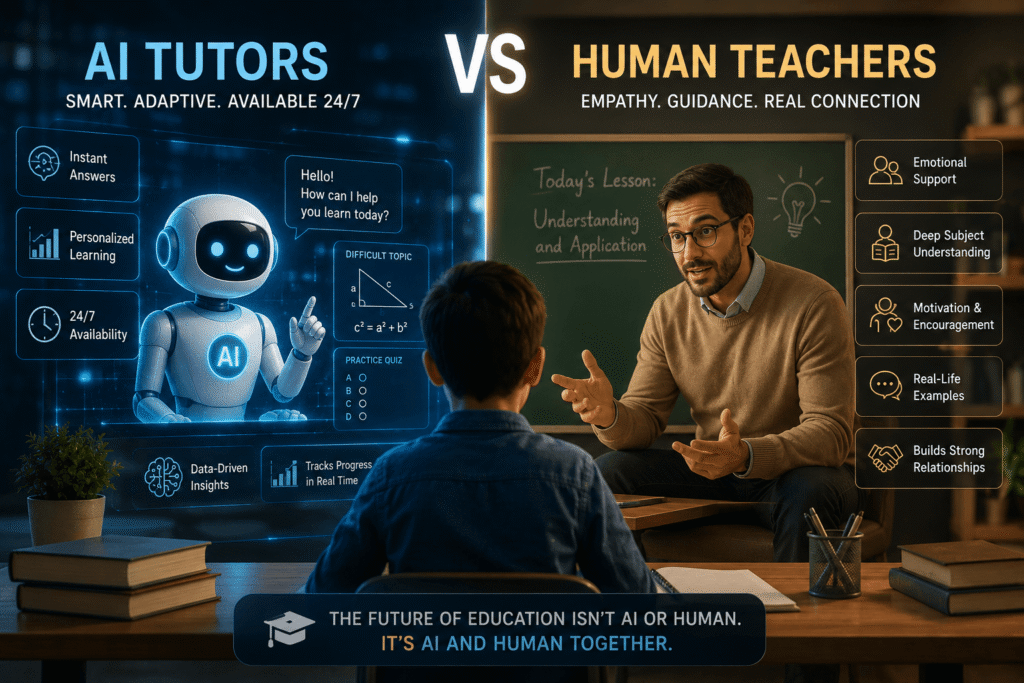
4. Can AI replace teachers?
No. AI is designed to assist learning, not replace teachers. Educators provide guidance, feedback, and real-world experience that AI cannot fully replicate.
5. Should students use AI for homework?
AI can support homework by explaining concepts, suggesting ideas, and helping with research. However, students should complete their own work, verify information, and follow their school’s academic integrity policies.
Conclusion
The AI Tools Every Student Should Know are transforming the way students learn, research, write, and collaborate. From AI-powered writing assistants to smart research platforms and note-taking applications, these tools can save time and improve productivity while making learning more engaging.
The key to success is using AI responsibly. Treat it as a study partner that helps you understand concepts, organize your work, and develop valuable skills—not as a shortcut to avoid learning. By combining AI with critical thinking, creativity, and ethical practices, you’ll be better prepared for academic success and future careers.
As artificial intelligence continues to evolve, students who embrace these technologies wisely will gain a significant advantage in education and beyond.