Humanoid Robots: Are They Ready for Everyday Life?
Introduction
Humanoid robots are no longer limited to science fiction movies. Thanks to rapid advances in artificial intelligence, robotics, computer vision, and machine learning, these human-like machines are becoming increasingly capable of performing everyday tasks. From assisting doctors in hospitals to helping customers in stores and supporting elderly people at home, Humanoid Robots are moving closer to becoming part of daily life.
Companies around the world are investing billions of dollars in robotics research to develop intelligent machines that can interact naturally with people. As these technologies improve, businesses and consumers alike are asking an important question: Are humanoid robots truly ready for everyday life?
In this guide, we’ll explore how humanoid robots work, where they’re already being used, the benefits they offer, the challenges they still face, and what the future may hold.
Table of Contents
- What Are Humanoid Robots?
- Why Humanoid Robots Matter
- How Humanoid Robots Work
- Where Humanoid Robots Are Used Today
- Benefits of Humanoid Robots
- Best Practices for Adoption
- Common Mistakes to Avoid
- Practical Checklist
- Frequently Asked Questions
- Conclusion
What Are Humanoid Robots?
Humanoid robots are robots designed to resemble the human body. While not every humanoid robot looks exactly like a person, many have features such as:
- A head
- Two arms
- Two legs
- Cameras that function like eyes
- Microphones for hearing
- Speakers for communication
- Artificial intelligence for decision-making
Their human-like design allows them to work in environments originally built for people. Instead of redesigning homes, offices, hospitals, or factories, engineers can create robots capable of operating within existing spaces.
Unlike traditional industrial robots that perform repetitive tasks in one location, humanoid robots are built to move, interact, and adapt to changing situations.
Key Components of Humanoid Robots
Artificial Intelligence in Humanoid Robots
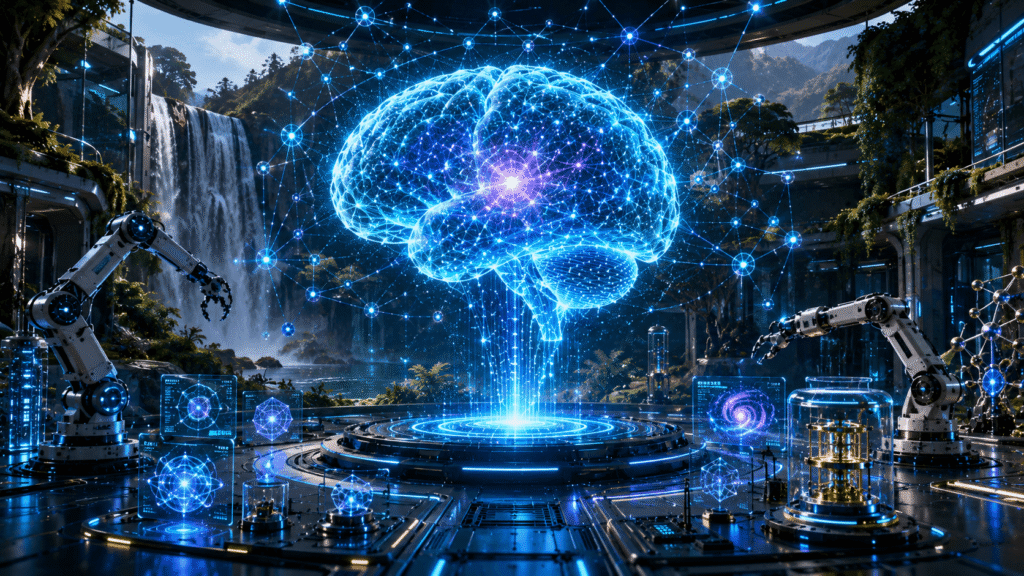
AI acts as the robot’s brain. It enables learning, decision-making, speech recognition, object identification, and problem-solving.
Computer Vision of Humanoid Robots
Using cameras and sensors, robots can recognize faces, detect obstacles, identify objects, and understand their surroundings.
Motion Systems of Humanoid Robots
Advanced motors and actuators allow robots to walk, climb stairs, grasp objects, and maintain balance.
Sensors
Modern humanoid robots include:
- Pressure sensors
- Temperature sensors
- Motion sensors
- Touch sensors
- Depth cameras
Together, these technologies help robots interact safely with people.
Why Humanoid Robots Matter?
Humanoid robots represent one of the most significant technological developments of the decade. Their ability to combine physical movement with artificial intelligence opens new possibilities across many industries.
Several global trends are driving their adoption.
Labor Shortages
Many countries face aging populations and workforce shortages. Humanoid robots can help fill gaps in healthcare, logistics, manufacturing, and customer service.
Workplace Safety
Robots can perform dangerous tasks that may put human workers at risk.
Examples include:
- Nuclear inspections
- Disaster response
- Mining operations
- Chemical manufacturing
Better Healthcare Support
Hospitals increasingly use robotics to assist with repetitive tasks, allowing healthcare professionals to spend more time with patients.
Humanoid robots may eventually support:
- Patient monitoring
- Medicine delivery
- Rehabilitation exercises
- Elderly care
Improved Customer Experience
Some hotels, airports, banks, and retail stores are already experimenting with humanoid robots that greet visitors, answer common questions, and provide directions.
These robots can:
- Work 24/7
- Speak multiple languages
- Reduce waiting times
- Improve customer satisfaction
Helping People at Home
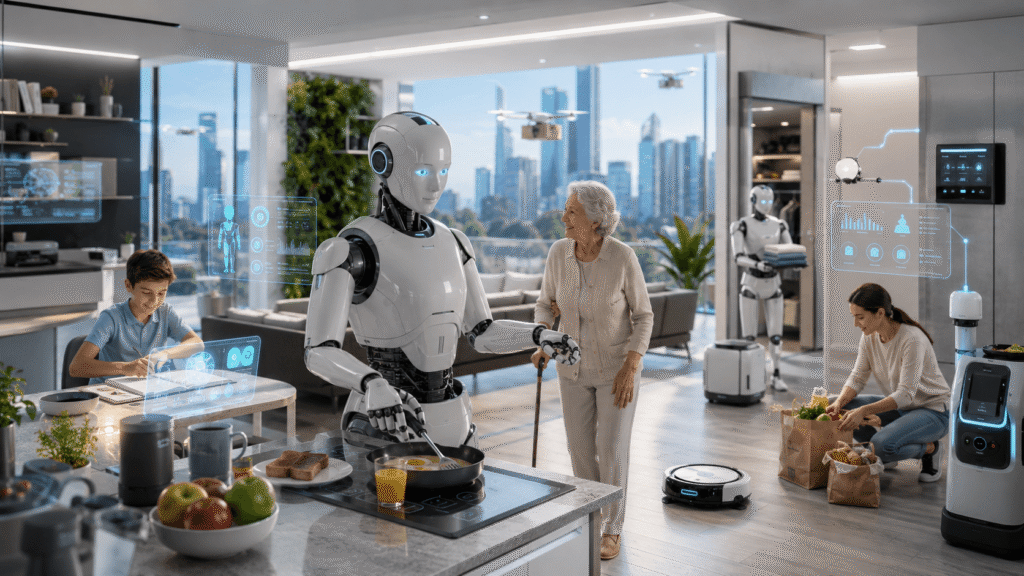
One of the biggest goals of robotics companies is developing personal assistant robots capable of helping families with everyday activities.
Future home robots may:
- Prepare simple meals
- Assist elderly family members
- Monitor home security
- Help children with homework
- Remind users about medication
- Perform household chores
Although fully capable home assistants are still under development, significant progress is being made every year
How Humanoid Robots Work?
Humanoid robots combine artificial intelligence, robotics, sensors, and machine learning to understand their surroundings and perform tasks. Unlike traditional robots that repeat the same programmed actions, humanoid robots can learn, adapt, and interact with people.
Their operation relies on several advanced technologies working together.
Artificial Intelligence Is the Brain
Artificial intelligence enables humanoid robots to:
- Understand spoken language
- Recognize faces and objects
- Make decisions based on data
- Learn from experience
- Improve performance over time
For example, if a customer asks a robot where to find a product in a store, AI helps the robot understand the question and provide the correct answer.
Computer Vision Helps Robots See
Computer vision allows robots to interpret visual information using cameras and sensors.
A humanoid robot can:
- Detect people nearby
- Identify objects
- Read QR codes
- Avoid obstacles
- Navigate safely
This capability is essential in busy places such as hospitals, airports, and shopping centers.
Natural Language Processing Enables Communication
Natural Language Processing (NLP) helps robots understand and respond to human speech.
Instead of using complex commands, people can communicate naturally.
For example:
Person: “Can you show me the nearest pharmacy?”
Robot: “Certainly. Please follow me.”
As AI language models continue to improve, conversations with robots are becoming more natural and accurate.
Motion and Balance Systems
Walking like a human is one of the most difficult challenges in robotics.
Humanoid robots use:
- Electric motors
- Advanced joints
- Balance sensors
- Gyroscopes
- AI-powered movement planning
These systems help them:
- Walk on uneven surfaces
- Climb stairs
- Pick up objects
- Open doors
- Carry packages
Where Humanoid Robots Are Used Today?
Humanoid robots are no longer experimental concepts. Many organizations are already testing or using them in real-world environments.
Healthcare
Healthcare is one of the fastest-growing industries for Humanoid Robots.
Robots can assist by:
- Delivering medication
- Guiding patients
- Monitoring vital signs
- Supporting rehabilitation
- Assisting elderly individuals
Rather than replacing doctors or nurses, Humanoid Robots help reduce workloads and improve efficiency.
Example: A hospital robot can deliver supplies across multiple departments, allowing medical staff to focus more on patient care.
Manufacturing
Factories have used Humanoid Robots for decades, but modern humanoid robots offer greater flexibility.
They can:
- Assemble products
- Inspect quality
- Move inventory
- Handle repetitive tasks
- Work safely alongside humans
AI allows these Humanoid Robotsto adapt to changing production needs more effectively than traditional industrial robots.
Retail and Customer Service as a Humanoid Robots
Retailers are exploring humanoid robots to improve customer experiences.
Robots can:
- Welcome visitors
- Answer common questions
- Recommend products
- Check inventory
- Guide customers through stores
This helps businesses reduce waiting times while improving service quality.
Education
Educational institutions are introducing robots to create interactive learning experiences.
They can:
- Teach programming
- Support language learning
- Explain science concepts
- Assist students with disabilities
These tools make classrooms more engaging while giving teachers additional support.
Hospitality
Hotels and restaurants are experimenting with humanoid robots for routine services.
Examples include:
- Greeting guests
- Delivering room service
- Providing directions
- Managing check-ins
- Offering multilingual assistance
Although human employees remain essential, robots can improve operational efficiency.
Home Assistance
Personal assistant robots remain one of the most exciting developments in robotics.
Future home robots may help with:
- Cleaning
- Laundry
- Cooking assistance
- Grocery organization
- Medication reminders
- Home security monitoring
While today’s home robots have limited capabilities, rapid AI improvements suggest these features will become more common in the coming years.
Benefits of Humanoid Robots
- Faster operations
- Improved consistency
- Reduced downtime
- Higher efficiency
- Disaster zones
- Chemical plants
- Nuclear facilities
- Deep mines
- High-temperature environments
- 24/7 assistance
- Instant responses
- Multiple language support
- Consistent service quality
- Monitoring daily activities
- Providing medication reminders
- Detecting falls
- Offering companionship
- Connecting users with healthcare professionals
- Improve decision-making
- Recognize new situations
- Adapt to changing environments
- Deliver increasingly personalized assistance
Challenges and Limitations of Humanoid Robots
Although humanoid robots have made remarkable progress, they are not yet ready to replace humans in every situation. Several technical, financial, and ethical challenges still need to be addressed before they become a common part of everyday life.
High Development and Purchase Costs
Building a humanoid robot requires advanced hardware, AI software, sensors, and precision engineering. As a result, many robots are still expensive for small businesses and households.
Current challenges include:
- High manufacturing costs
- Expensive maintenance
- Software updates
- Battery replacement
- Specialized technical support
As technology advances and production scales up, prices are expected to decrease.
Limited Decision-Making
Even the most advanced robots cannot think like humans.
They may struggle with:
- Unexpected situations
- Emotional conversations
- Complex ethical decisions
- Creative problem-solving
This is why human supervision remains essential in many industries.
Privacy and Data Security
Humanoid robots often use cameras, microphones, and cloud-based AI systems to perform their tasks.
This raises important questions about:
- Personal privacy
- Data collection
- Cybersecurity
- Responsible AI use
Businesses must ensure that customer information is protected and handled responsibly.
Public Acceptance
Many people are still uncertain about interacting with robots.
Common concerns include:
- Job displacement
- Trust in AI
- Safety
- Privacy
- Reliability
Education and transparent AI development will play a key role in building public confidence
Best Practices for Adopting Humanoid Robots
Organizations considering humanoid robots should follow a structured approach to maximize benefits while minimizing risks.
Start with Simple Tasks
Instead of assigning robots highly complex responsibilities, begin with repetitive tasks such as:
- Greeting visitors
- Delivering packages
- Providing directions
- Inventory management
- Basic customer support
This allows businesses to evaluate performance before expanding their use.
Train Employees
Employees should understand:
- How robots operate
- Safety procedures
- Basic troubleshooting
- Human-robot collaboration
Proper training helps create a smoother working environment.
Prioritize Safety
Always ensure that robots:
- Detect nearby people
- Avoid collisions
- Follow workplace safety standards
- Receive regular maintenance
Safety should always come before automation.
Keep Software Updated
AI systems improve continuously through software updates.
Regular updates help:
- Improve performance
- Fix security issues
- Enhance accuracy
- Add new features
Measure Performance
Businesses should monitor:
- Productivity improvements
- Customer satisfaction
- Cost savings
- Maintenance costs
- Employee feedback
These insights help determine whether robotic solutions are delivering value.
Common Mistakes to Avoid
Organizations often make avoidable mistakes when adopting new technology.
Avoid these common errors:
Expecting Robots to Replace Humans Completely
Humanoid robots work best when supporting human workers rather than replacing them.
Ignoring Employee Training
Without proper training, employees may misuse robots or fail to use them effectively.
Choosing Technology Without Clear Goals
Businesses should identify specific problems they want robots to solve before investing.
Neglecting Cybersecurity
Since robots often connect to networks, strong cybersecurity practices are essential.
Focusing Only on Cost
The cheapest robot is not always the best choice.
Consider:
- Reliability
- Support
- Software updates
- Scalability
- Long-term value
Practical Checklist for Businesses
Before adopting humanoid robots, review this checklist:
✅ Identify business goals.
✅ Define tasks suitable for automation.
✅ Calculate return on investment (ROI).
✅ Compare different robotics solutions.
✅ Train employees.
✅ Implement cybersecurity measures.
✅ Monitor performance regularly.
✅ Update AI software consistently.
✅ Collect customer feedback.
✅ Review ethical and legal considerations.
Following these steps can help organizations adopt robotics more effectively.
Ready to Explore the Future of Robotics
Humanoid robots are evolving rapidly, and staying informed is essential for businesses, students, and technology enthusiasts.
Whether you’re curious about AI-powered robots, future technology, or emerging innovations, Future Science AI is here to help you understand complex topics through clear, reliable, and engaging content.
Call to Action
Want to stay ahead of the latest AI and robotics trends?
Explore more expert articles on FutureScienceAI.com
Learn how AI is transforming industries worldwide
Discover practical insights into future technologies
Share this article with friends or colleagues interested in robotics
The future is arriving faster than ever—and understanding it today can help you prepare for
Frequently Asked Questions (FAQ)
1. What are humanoid robots?
Humanoid robots are robots designed to resemble humans in appearance and movement. They use artificial intelligence (AI), sensors, cameras, and advanced software to interact with people, understand their surroundings, and perform a variety of tasks. They are increasingly used in industries such as healthcare, manufacturing, retail, and education.
2. Are humanoid robots ready for everyday life?
Humanoid robots are becoming more capable every year, but they are not yet common in most homes. They are already helping businesses, hospitals, and research organizations with specific tasks. As AI technology advances and costs decrease, humanoid robots are expected to become more practical for everyday use.
3. What are the benefits of humanoid robots?
Some of the biggest advantages include:
- Increased productivity
- Improved workplace safety
- Better customer service
- Support for elderly care
- Assistance with repetitive tasks
- 24/7 availability
- Reduced operational costs over time
These benefits make humanoid robots valuable across many industries.
4. Will humanoid robots replace human jobs?
Humanoid robots are more likely to work alongside humans rather than replace them entirely. They are best suited for repetitive, dangerous, or physically demanding tasks, allowing people to focus on creative thinking, decision-making, communication, and problem-solving.
5. What is the future of humanoid robots?
The future of humanoid robots looks promising. Experts expect robots to become more intelligent, affordable, and adaptable. In the coming years, they are likely to play a greater role in healthcare, logistics, education, customer service, manufacturing, and even household assistance.
Conclusion
Humanoid robots are transforming from futuristic concepts into practical tools that can support people in everyday life. Powered by artificial intelligence, machine learning, and advanced robotics, these machines are already improving productivity, enhancing customer experiences, and assisting professionals in healthcare, manufacturing, and other industries.
Although challenges such as cost, privacy, and technical limitations remain, ongoing innovation continues to push the technology forward. Rather than replacing humans, humanoid robots are expected to complement human skills by handling repetitive and physically demanding tasks while people focus on creativity, empathy, and strategic decision-making.
For businesses, students, and technology enthusiasts, understanding humanoid robots today provides valuable insight into the future of work and daily living. As adoption grows across the USA, Canada, Europe, and the UK, staying informed will help individuals and organizations prepare for the next generation of intelligent automation.
If you’re passionate about AI, robotics, and future technologies, continue exploring FutureScienceAI.com for expert insights, practical guides, and the latest innovations shaping tomorrow’s world.