The Future of Renewable Energy Technologies
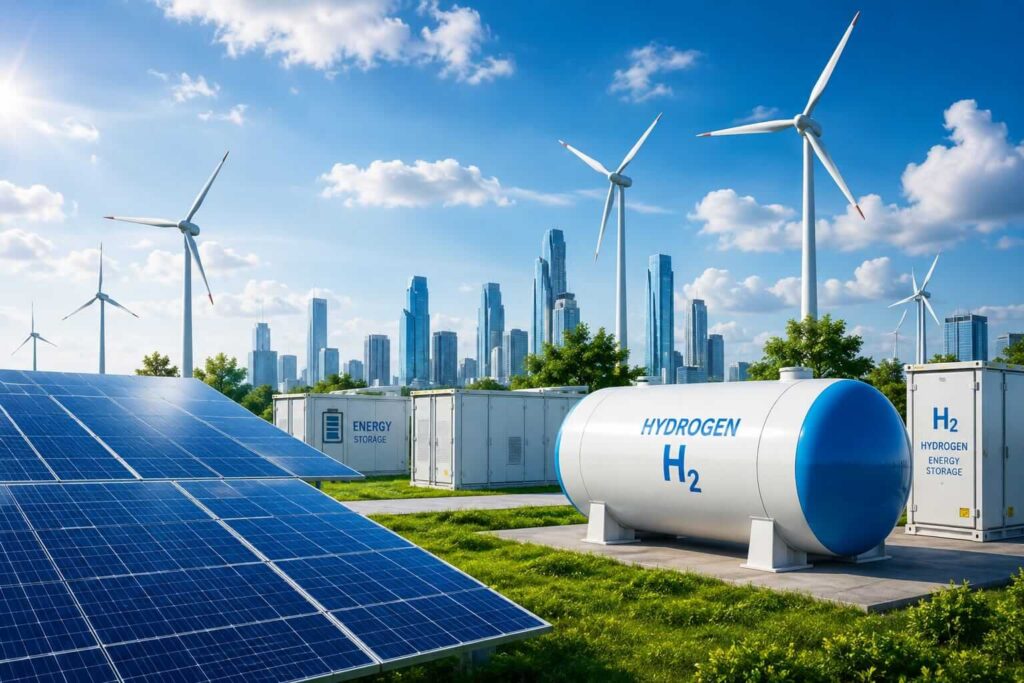
The future of renewable energy technologies is moving far beyond traditional solar panels and wind turbines. Solar power is becoming more efficient, batteries are improving, smart grids are becoming more sophisticated, and new technologies such as green hydrogen, advanced geothermal systems, and long-duration energy storage are changing how electricity can be generated and delivered.
This transition matters to households, businesses, governments, and investors across the USA, Canada, Europe, and the UK. Renewable energy is no longer only a climate solution. It is increasingly connected to energy security, electricity costs, technological innovation, and long-term economic resilience.
The International Energy Agency expects global renewable power capacity to increase by about 4,600 GW between 2025 and 2030, with solar photovoltaic technology accounting for almost 80% of the expected expansion.
So, what will renewable energy look like in the coming years? Let’s explore the technologies, opportunities, challenges, and practical changes shaping the next generation of clean energy.
Table of Contents
1. Why the Future of Renewable Energy Technologies Matters
2. How Renewable Energy Is Changing
3. Solar Power: Smaller, Smarter, and More Efficient
4. The Next Generation of Wind Energy
5. Battery Storage and Long-Duration Energy Storage
6. Smart Grids and Artificial Intelligence
7. Green Hydrogen and Renewable Fuels
8. Advanced Geothermal and Other Emerging Technologies
9. Benefits of Future Renewable Energy Technologies
10. Best Practices for Businesses and Homeowners
11. Common Mistakes to Avoid
12. Practical Renewable Energy Checklist
13. FAQ
14. Conclusion
Why the Future of Renewable Energy Technologies Matters?
The global energy system is changing because electricity demand is rising while countries are trying to reduce dependence on fossil fuels.
Data centres, electric vehicles, heat pumps, industrial electrification, and digital infrastructure are all increasing electricity demand. At the same time, extreme weather and energy-price volatility have made energy resilience more important.
Renewable energy can help address these challenges because sources such as sunlight, wind, water, and geothermal heat are naturally replenished.
However, the next stage of the transition is not simply about installing more generation capacity.
The bigger question is:
How can clean electricity be produced, stored, managed, and delivered reliably when people need it?
That is where the future becomes particularly interesting.
IRENA reported that global renewable power capacity reached approximately 5,149 GW after 692 GW of additions in 2025, representing an annual increase of 15.5%.
How Renewable Energy Is Changing?
Early future of renewable energy technologies systems often focused on individual technologies.
For example, a solar farm generated electricity during daylight hours, while a wind farm generated electricity when wind conditions were favourable.
The future of renewable energy technologies is more integrated.
Instead of relying on one technology, energy systems increasingly combine:
- Solar photovoltaic panels
- Onshore and offshore wind
- Battery storage
- Hydropower
- Pumped-storage systems
- Smart grids
- Artificial intelligence
- Demand-response systems
- Green hydrogen
- Advanced geothermal power
This combination can make renewable electricity more flexible and reliable.
IRENA’s 2026 analysis highlights the growing importance of combining solar, wind, and battery storage to provide firm electricity around the clock.
Solar Power: Smaller, Smarter, and More Efficient
Solar energy is likely to remain one of the most important technologies in the future renewable energy market.
Solar photovoltaic systems have already become widely available for homes, businesses, and large-scale power projects. However, innovation is continuing.
Next-generation solar panels
Researchers and manufacturers are working on technologies that can potentially produce more electricity from the same surface area.
One promising development is perovskite solar technology. Perovskite materials could eventually complement or improve conventional silicon-based solar cells.
IRENA’s latest cost analysis notes that next-generation perovskite solar cells are approaching commercial deployment.
Other developments include:
- Building-integrated photovoltaics
- Lightweight solar panels
- Flexible solar materials
- Agrivoltaics
- Solar windows
- Floating solar farms
- Higher-efficiency solar modules
For homeowners, this could mean solar systems that fit more easily into roofs, walls, parking areas, and other spaces.
The Next Generation of Wind Energy
Lorem ipsum dolor sit amet, consectetur adipiscing elit. Ut elit tellus, luctus nec ullamcorper mattis, pulvinar dapibus leo.Wind power will also play a major role in the renewable energy transition.
Onshore wind farms are already established in many regions. Meanwhile, offshore wind offers access to stronger and more consistent wind resources.
Floating offshore wind
One particularly exciting technology is floating offshore wind.
Traditional offshore turbines generally require fixed foundations attached to the seabed. Floating systems can operate in deeper waters, potentially opening larger areas for development.
The IEA expects offshore wind capacity expansion to accelerate through 2030, although the industry continues to face challenges involving costs, supply chains, permitting, and project economics.
Future wind turbines may also become larger, more efficient, and better connected to energy storage systems.
Battery Storage and Long-Duration Energy Storage
One of the biggest challenges with renewable electricity is variability.
Solar panels do not generate electricity at night. Wind output changes with weather conditions.
Energy storage helps solve this problem.
Advanced batteries
Lithium-ion batteries currently dominate many energy-storage applications. However, the industry is exploring alternatives such as:
- Sodium-ion batteries
- Flow batteries
- Solid-state batteries
- Thermal energy storage
- Compressed-air storage
- Pumped-storage hydropower
Battery costs have fallen dramatically over the long term. IRENA reports that battery storage costs fell by 93% between 2010 and 2025.
At the same time, newer storage technologies could become especially important for storing renewable electricity for many hours or even longer periods.
Smart Grids and Artificial Intelligence future of renewable energy technologies
future of renewable energy technologies systems will need smarter electricity networks.
A traditional electricity grid mainly moves electricity from large power plants toward consumers.
A smart grid can manage electricity in multiple directions while responding to changing demand and supply.
How AI can improve future of renewable energy technologies
Artificial intelligence can help energy operators:
- Forecast electricity demand
- Predict solar and wind generation
- Identify equipment problems
- Optimise battery charging
- Manage electricity distribution
- Detect unusual grid behaviour
- Reduce energy waste
For example, an AI system could predict high solar generation during the afternoon and determine when batteries should charge or discharge.
This combination of AI + renewable energy + storage could become one of the most important technology trends of the next decade.
Green Hydrogen and Renewable Fuels
Electricity is not the only part of the energy transition.
Some industries are difficult to electrify directly. Heavy industry, shipping, aviation, and certain chemical processes may require alternative fuels.
This is where green hydrogen could become important.
Green hydrogen is produced by using electricity from renewable sources to split water into hydrogen and oxygen through electrolysis.
Potential applications include:
- Steel production
- Chemical manufacturing
- Heavy transport
- Shipping fuels
- Seasonal energy storageIndustrial heating
However, green hydrogen still faces challenges involving production costs, infrastructure, transportation, and efficiency.
Therefore, it is best viewed as one part of a broader clean-energy system rather than a universal replacement for electricity.
Advanced Geothermal and Other Emerging Technologies
Solar and wind receive much of the attention, but other renewable technologies could become increasingly valuable.
Enhanced geothermal systems
Geothermal energy uses heat from inside the Earth.
Traditional geothermal projects are most practical in regions with suitable underground resources. Enhanced geothermal systems aim to expand geothermal development by engineering underground reservoirs where natural conditions are less favourable.
If these technologies become commercially scalable, geothermal could provide reliable low-carbon electricity with less dependence on weather.
Marine future of renewable energy technologies
Tidal and wave energy remain less developed than solar and wind, but they offer another potential source of renewable electricity.
The technology still needs improvements in cost, durability, maintenance, and deployment.
Consequently, these technologies may remain more specialised while solar, wind, storage, and grid technologies dominate near-term expansion.
Benefits of future of renewable energy technologies
The development of renewable energy technologies can provide several important benefits.
Lower electricity costs
future of renewable energy technologies have become increasingly competitive.
IRENA’s 2026 report found that more than 90% of utility-scale renewable projects commissioned in 2025 produced electricity below the cost of the cheapest new fossil-fuel generation option in their respective markets.
However, actual electricity prices also depend on grid costs, financing, location, taxes, regulation, and system design.
Greater energy security
Countries that produce more electricity from domestic renewable resources can reduce exposure to international fossil-fuel price shocks.
This is particularly important for countries that import significant amounts of oil or natural gas.
New jobs and industries
The renewable energy transition is creating demand for professionals in:
- Engineering
- Construction
- Manufacturing
- Data science
- Artificial intelligence
- Electrical systems
- Energy management
- Research and development
Reduced environmental impact
Renewable electricity can significantly reduce greenhouse-gas emissions when it replaces fossil-fuel generation.
It can also contribute to cleaner air and support long-term climate goals.
Best Practices for Businesses and Homeowners future of renewable energy technologies
Step 1 — Understand your energy consumption
Review electricity bills and identify when energy use is highest.
Step 2 — Evaluate the available renewable resource
For solar, examine roof orientation, shading, local sunlight, and available space.
For businesses, consider whether rooftop, ground-mounted, or off-site renewable generation makes the most sense.
Step 3 — Consider storage
If electricity demand continues after sunset, battery storage may improve the value of solar generation.
Step 4 — Check local regulations
Permits, grid connection rules, incentives, and building requirements differ across the USA, Canada, Europe, and the UK.
Step 5 — Think long term
Compare the total cost, expected system life, maintenance requirements, financing, and potential energy savings.
The cheapest system upfront is not always the best investment.
Common Mistakes to Avoid future of renewable energy technologies
future of renewable energy technologies can deliver major benefits, but poor planning can reduce its effectiveness.
Avoid these common mistakes:
- Choosing a system without analysing energy consumption
- Focusing only on the initial purchase price
- Ignoring battery and storage requirements
- Underestimating grid connection limitations
- Using unrealistic savings estimates
- Ignoring maintenance costs
- Choosing equipment without checking warranties
- Assuming one renewable technology works equally well everywhere
- Following technology trends without considering local conditions
Most importantly, renewable energy should be treated as an integrated energy-system decision rather than simply a technology purchase.
Practical future of renewable energy technologies Checklist
Before investing in renewable energy, ask:
- What is my current electricity consumption?
- When is my energy demand highest?
- Is solar, wind, geothermal, or another option suitable for my location?
- Do I need energy storage?
- Can my local grid accept additional generation?
- What permits are required?
- What incentives or financing options are available?
- How much maintenance will the system require?
- What is the expected payback period?
- Can the system be expanded later?
This checklist can help homeowners and businesses make more informed decisions.
CTA — Prepare for the Clean future of renewable energy technologies
The energy system of tomorrow is being built today.
Whether you are a homeowner exploring solar power, a business evaluating energy efficiency, or a decision-maker researching emerging clean technologies, understanding renewable energy trends can help you make smarter long-term choices.
Want to explore the technologies shaping tomorrow’s energy system?
For more insights into artificial intelligence, science, climate, space, and future technologies, continue exploring Future Science AI.
Frequently Asked Questions About the Future of Renewable Energy Technologies
https://www.ibm.com/think/insights/renewable-energy-future
What is the future of renewable energy technologies?
The future of renewable energy technologies includes more efficient solar and wind systems, advanced batteries, smart grids, artificial intelligence, green hydrogen, geothermal systems, and integrated energy networks.
Which renewable energy technology has the biggest future?
Solar photovoltaic technology is expected to remain the largest source of renewable capacity growth in the near term. The IEA projects solar PV to account for almost 80% of global renewable capacity expansion between 2025 and 2030.
Will battery storage become more important?
Yes. Battery storage is becoming increasingly important because solar and wind generation varies throughout the day. Batteries can store electricity when supply is high and release it when demand increases.
Can renewable energy provide electricity 24/7?
Yes, when renewable generation is combined with appropriate storage, grid management, demand response, and complementary generation. Solar-plus-battery and wind-plus-battery systems are increasingly being studied and deployed for firm electricity supply.
What challenges could slow renewable energy growth?
Major challenges include grid congestion, permitting delays, financing costs, supply-chain constraints, land use, transmission infrastructure, and changing government policies. The IEA identifies grid integration, financing, and supply-chain issues among the important barriers to faster deployment.
Conclusion
https://futurescienceai.com/blog/future-tech/flying-cars-how-close-are-we-to-takeoff/
The future of renewable energy technologies will not be defined by a single invention. Instead, it will emerge from the combination of solar power, wind energy, energy storage, smart grids, artificial intelligence, green hydrogen, geothermal systems, and better energy management.
Solar is expected to lead renewable capacity growth, while batteries and other storage technologies can help address the intermittency of renewable generation. Meanwhile, AI and smart-grid technologies can make electricity systems more responsive and efficient.
The momentum is already substantial. IRENA reported that renewable power capacity increased by 692 GW during 2025, bringing total global renewable capacity to about 5,149 GW.
Still, technology alone will not be enough. Successful deployment will also require modern transmi