The Future of Robotics in Everyday Life
Introduction
The Future of Robotics in Everyday Life is rapidly becoming a reality. Robots are no longer limited to factories, research laboratories, or science fiction movies. Today, intelligent machines assist people in homes, hospitals, offices, warehouses, schools, and public spaces. As artificial intelligence continues to advance, robotics technology is becoming smarter, safer, and more accessible.
Moreover, businesses and consumers across the USA, Canada, Europe, and the UK are adopting robotics solutions to improve efficiency, reduce costs, and enhance everyday experiences. Consequently, understanding how robotics will shape our future has become increasingly important for individuals, organizations, and decision-makers.
—
Table of Contents
1. Introduction
2. Why the Future of Robotics in Everyday Life Matters
3. Understanding Modern Robotics
4. How Robots Are Already Part of Daily Life
5. Key Benefits of Robotics
6. Future Robotics Trends
7. Best Practices for Adopting Robotics
8. Common Mistakes to Avoid
9. Practical Robotics Readiness Checklist
10. Call to Action
11: FAQ
12. Conclusion
Why the Future of Robotics in Everyday Life Matters
Robotics is transforming the way people live and work. While previous generations viewed robots as futuristic concepts, modern society increasingly relies on automation and intelligent systems.
Several factors are driving this transformation:
- Growing labor shortages
- Aging populations
- Increased demand for efficiency
- Advances in artificial intelligence
- Lower technology costs
- Greater consumer acceptance
As a result, robots are becoming valuable tools that support rather than replace human capabilities.
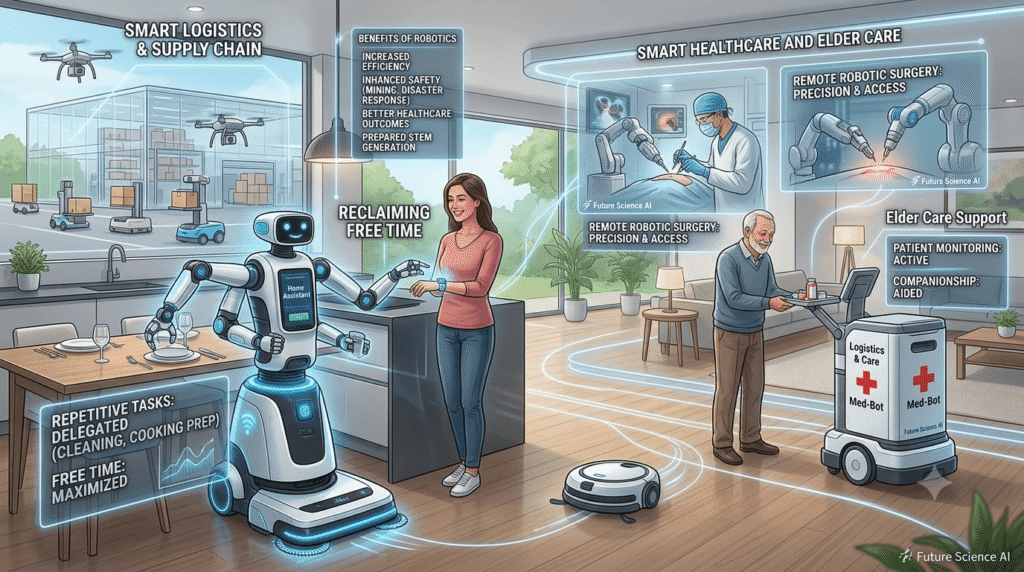
For example, hospitals use robotic assistants to transport supplies, while retailers use autonomous systems to manage inventory. Meanwhile, households benefit from robotic vacuum cleaners and smart home technologies.
Understanding the Future of Robotics in Everyday Life
Robotics combines engineering, software development, sensors, machine learning, and artificial intelligence to create machines capable of performing tasks with varying levels of autonomy.
What Makes Modern Robots Different?
Modern robots are significantly more advanced than earlier generations because they can:
- Analyze data in real time
- Learn from experience
- Adapt to changing environments
- Communicate with humans
- Make intelligent decisions
Furthermore, cloud computing and AI have expanded robotic capabilities beyond simple automation.
The Role of Artificial Intelligence
Artificial intelligence acts as the brain behind many robotic systems. Without AI, robots would simply follow fixed instructions. However, AI allows robots to recognize objects, understand speech, and respond intelligently.
How Robots Are Already Part of Daily Life
Many people interact with robotics technology every day without realizing it.
Smart Homes
Home robotics solutions are becoming increasingly popular.
Examples include:
- Robot vacuum cleaners
- Smart lawn mowers
- Home security robots
- Automated cleaning system
- Smart kitchen assistants
In addition, smart homes use robotic technologies to automate lighting, temperature control, and security monitoring.
Healthcare
Healthcare represents one of the fastest-growing areas for robotics adoption.
Robots help with:
- Surgical procedures
- Patient monitoring
- Medication delivery
- Rehabilitation therapy
- Elderly care support
Consequently, healthcare providers can improve patient outcomes while reducing operational pressures.
Retail and E-Commerce
Retail companies increasingly use robots to:
- Track inventory
- Manage warehouses
- Improve logistics
- Process online orders
- Assist customers
As consumer expectations continue to rise, robotics helps businesses deliver faster and more reliable services.
Education
Educational institutions are integrating robotics into learning environments.
Students benefit from:
- Hands-on STEM learning
- Programming experience
- Problem-solving development
- Creative thinking exercises
Therefore, robotics education prepares future generations for technology-driven careers.
Major Benefits of Robotics in Everyday Life
The Future of Robotics in Everyday Life offers significant advantages across multiple sectors.
Increased Efficiency
Robots perform repetitive tasks consistently and accurately. As a result, organizations improve productivity while minimizing human error.
Enhanced Safety
Many robots operate in hazardous environments where human workers may face risks.
Examples include:
- Mining operations
- Disaster response
- Industrial inspections
- Hazardous material handling
Consequently, workplace safety improves dramatically.
Better Healthcare Outcomes
Robotic surgery often allows greater precision. Additionally, rehabilitation robots support recovery processes for patients.
Improved Quality of Life
Home robotics helps people save time and focus on more meaningful activities.
For older adults, robotic assistance can support independent living and daily care.
Economic Growth
The robotics industry creates new opportunities in:
- Software engineering
- Data science
- Manufacturing
- Maintenance services
- AI development
Therefore, robotics contributes to innovation and economic expansion.
Future Robotics Trends to Watch
The coming decade will bring exciting developments.
Human-Robot Collaboration
Collaborative robots, often called cobots, work alongside humans rather than replacing them.
These systems enhance productivity while maintaining human oversight.
Autonomous Service Robots
Service robots will become more common in:
- Hotels
- Airports
- Restaurants
- Hospitals
- Retail stores
As technology matures, these robots will provide increasingly personalized services.
Robotics and Smart Cities
Future smart cities will rely heavily on robotics.
Applications may include:
- Traffic management
- Infrastructure inspection
- Public safety monitoring
- Environmental data collection
Agricultural Robotics
Farmers increasingly adopt robotic technologies for:
- Crop monitoring
- Harvesting
- Precision irrigation
- Weed control
Consequently, agriculture becomes more sustainable and efficient.
Advanced Personal Assistants
Future home robots may:
- Manage schedules
- Assist elderly individuals
- Monitor health conditions
- Provide companionship
- Coordinate household tasks
Best Practices for Adopting Robotics
Organizations and individuals considering robotics should follow several best practices.
Step 1: Identify Specific Needs
Begin by evaluating challenges and goals.
Ask questions such as:
- Which tasks are repetitive?
- Where can efficiency improve?
- What problems need solving?
Step 2: Choose Scalable Solutions
Invest in systems that can grow alongside organizational needs.
Step 3: Prioritize User Training
Technology adoption succeeds when people understand how to use it effectively.
Step 4: Maintain Cybersecurity
Connected robots require strong security measures.
Step 5: Measure Performance
Track metrics such as:
- Productivity gains
- Cost savings
- Customer satisfaction
- Operational efficiency
As a result, businesses can optimize long-term returns.
Common Mistakes to Avoid
Many organizations encounter challenges during robotics adoption.
Avoid these mistakes:
Expecting Immediate Results
Technology implementation requires planning and adjustment.
Ignoring Employee Training
Without training, users may struggle to maximize robotic capabilities.
Overlooking Security Risks
Connected devices require ongoing protection.
Choosing Technology Without Clear Objectives
Organizations should focus on solving real problems rather than following trends.
Neglecting Maintenance
Regular maintenance ensures consistent performance and reliability.
Practical Robotics Readiness Checklist
Before implementing robotics solutions, review the following checklist:
✔️ Define clear goals
✔️ Identify repetitive tasks
✔️ Evaluate budget requirements
✔️ Assess infrastructure readiness
✔️ Train employees
✔️ Establish cybersecurity measures
✔️ Monitor performance metrics
✔️ Plan long-term maintenance
✔️ Consider future scalability
✔️ Measure return on investment
Ready to Explore the Future?
Robotics is reshaping industries, homes, and communities across the world. Organizations that prepare today can benefit from greater efficiency, innovation, and competitive advantage tomorrow.
Call to Action
Want to stay informed about emerging technologies, artificial intelligence, robotics, and future science trends?
Visit Future Science AI regularly for expert insights, practical guides, and the latest developments shaping tomorrow’s world. You can also contact us to learn more about technology trends that may impact your business or industry.
Frequently Asked Questions (FAQ)
Q1: What is the Future of Robotics in Everyday Life?
The Future of Robotics in Everyday Life refers to the growing integration of intelligent robots into homes, healthcare, transportation, education, and business environments.
Q2: Will robots replace human jobs completely?
No. Most experts expect robots to automate repetitive tasks while creating new opportunities that require human creativity, leadership, and problem-solving skills.
Q3: How are robots used in healthcare?
Healthcare robots assist with surgery, patient monitoring, rehabilitation, logistics, and elderly care support.
Q4: Are home robots becoming more affordable?
Yes. Advances in technology and increased production are making home robotics solutions more accessible to consumers.
Q5: What industries benefit most from robotics?
Healthcare, manufacturing, retail, logistics, agriculture, education, and transportation currently experience some of the greatest benefits from robotics adoption
Conclusion
The Future of Robotics in Everyday Life is no longer a distant vision. Intelligent machines are already improving healthcare, supporting businesses, enhancing education, and making homes more efficient. Furthermore, advances in artificial intelligence, automation, and connectivity will continue expanding the role of robotics across society.
As organizations and individuals prepare for the future, embracing robotics thoughtfully can unlock significant opportunities for innovation, productivity, and improved quality of life. Those who understand and adapt to these changes today will be better positioned for success in the years ahead.