What Is Digital Twin Technology? A Complete Beginner's Guide
Introduction
Digital Twin Technology is transforming the way businesses design, monitor, and improve products, machines, buildings, and even entire cities. Instead of relying only on physical testing, companies can now create virtual versions of real-world objects and update them continuously with live data.
As industries become smarter, digital twins are helping organizations reduce costs, improve efficiency, predict failures before they happen, and make better decisions. From manufacturing plants in Germany to healthcare systems in Canada and smart cities in the United Kingdom, this technology is becoming an essential part of digital transformation.
Whether you are a student, business owner, technology enthusiast, or decision-maker, understanding Digital Twin Technology can help you stay ahead in a rapidly changing world.
Table of Contents
- What Is Digital Twin Technology?
- Why Digital Twin Technology Matters
- How Digital Twin Technology Works
- Key Components of a Digital Twin
- Real-World Applications
- Benefits of Digital Twin Technology
- Best Practices for Successful Implementation
- Common Mistakes to Avoid
- Practical Checklist
- Frequently Asked Questions
- Conclusion
What Is Digital Twin Technology?
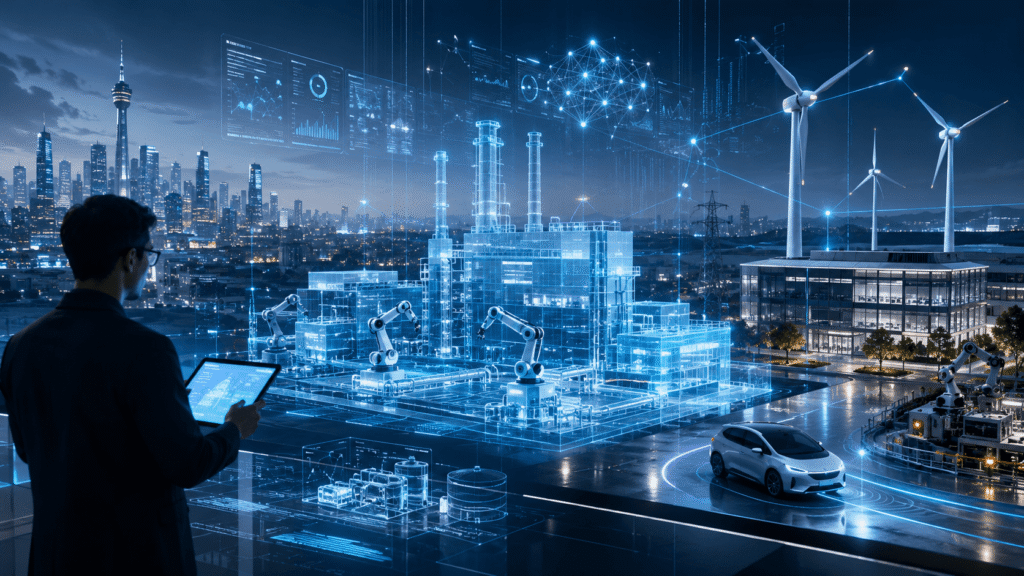
Digital Twin Technology is a digital representation of a physical object, system, or process. Unlike a simple 3D model, a digital twin receives real-time information from sensors, software, and connected devices.
This continuous flow of information allows the virtual model to behave like its physical counterpart.
For example, imagine a wind turbine.
Instead of waiting until it breaks, engineers monitor its digital twin. The virtual model analyzes temperature, vibration, wind speed, and performance in real time. If it detects unusual behavior, maintenance can be scheduled before costly failures occur.
This proactive approach saves money, reduces downtime, and improves safety.
Why Digital Twin Technology Matters?
Modern industries generate enormous amounts of data every second. Without advanced tools, much of that information remains unused.
Digital twins convert raw data into meaningful insights.
Organizations use them to:
- Improve operational efficiency
- Predict equipment failures
- Reduce maintenance costs
- Increase product quality
- Optimize energy consumption
- Test new ideas without physical risk
- Improve customer experiences
As businesses embrace AI, cloud computing, IoT, and automation, digital twins are becoming one of the most valuable technologies of the Industry 4.0 era.
How Does Digital Twin Technology Work?
Digital Twin Technology combines several advanced technologies into one intelligent system.
Step 1 – Collect Data
Sensors installed on physical equipment collect information such as:
- Temperature
- Pressure
- Speed
- Energy usage
- Location
- Humidity
- Performance metrics
These sensors are usually connected through the Internet of Things (IoT).
Step 2 – Send Data to the Cloud
The collected information is securely transmitted to cloud platforms.
Cloud computing allows organizations to store and process enormous amounts of data without expensive local infrastructure.
Step 3 – Create the Virtual Model
Specialized software creates a digital copy of the physical object.
This model updates continuously as new data arrives.
Step 4 – Analyze Using AI
Artificial intelligence analyzes the incoming data to identify:
- Hidden patterns
- Performance issues
- Future failures
- Optimization opportunities
AI helps businesses move from reactive maintenance to predictive maintenance.
Step 5 – Improve Real-World Performance
The insights generated by the digital twin help engineers make informed decisions.
Instead of guessing, businesses rely on accurate simulations and real-time analytics.
Key Components of a Digital Twin
A successful digital twin includes several essential elements.
Physical Asset
The real-world machine, product, building, or system.
Sensors
Devices that continuously collect live operational data.
Connectivity
Networks that transmit information between physical assets and cloud systems.
Data Platform
Cloud services store, organize, and process information.
Analytics Engine
AI and machine learning algorithms analyze the data.
Visualization Dashboard
Interactive dashboards help users monitor performance and make decisions.
Real-World Applications of Digital Twin Technology
Digital Twin Technology is no longer limited to research laboratories. It is being used across many industries.
Manufacturing
Factories monitor production lines in real time.
Manufacturers identify equipment issues before they interrupt production.
Healthcare
Hospitals use digital twins to improve medical equipment management and explore personalized treatment planning.
Smart Cities
City planners simulate traffic flow, energy consumption, water distribution, and public transportation to improve urban living.
Aerospace
Aircraft manufacturers monitor engine performance throughout the aircraft’s lifecycle.
This reduces maintenance costs and improves passenger safety.
Energy
Power companies monitor wind turbines, solar farms, and electrical grids using digital twins.
Construction
Construction firms create virtual building models before construction begins, reducing errors and project costs.
Automotive
Vehicle manufacturers test designs virtually before building physical prototypes, saving time and development expenses.
Benefits of Digital Twin Technology
Organizations around the world are investing in digital twins because they deliver measurable value.
Some of the biggest benefits include:
- Reduced maintenance costs
- Improved product quality
- Better customer satisfaction
- Faster product development
- Lower operational risks
- Increased efficiency
- Improved sustainability
- Better resource management
- Real-time monitoring
- Smarter business decisions
Companies that adopt Digital Twin Technology gain a competitive advantage by making faster, data-driven decisions instead of relying on assumptions.
Best Practices for Implementing Digital Twin Technology
Successfully adopting Digital Twin Technology requires more than installing sensors or using cloud software. Organizations need a clear strategy that aligns technology with business goals.
Define Clear Objectives
Start by identifying the problem you want to solve. For example:
- Reduce equipment downtime
- Improve product quality
- Lower maintenance costs
- Increase operational efficiency
- Enhance customer experiences
Clear objectives help measure success and ensure your digital twin delivers real business value.
Invest in High-Quality Data
A digital twin is only as reliable as the data it receives. Use accurate sensors and maintain consistent data collection to improve insights and decision-making.
Use Scalable Cloud Infrastructure
Choose cloud platforms that can grow with your business. As more devices connect to your digital twin, your infrastructure should support increased data storage and processing.
Integrate Artificial Intelligence
AI adds intelligence to digital twins by detecting patterns, predicting failures, and recommending improvements. Combining AI with Digital Twin Technology creates a more proactive and efficient system.
Prioritize Cybersecurity
Digital twins rely on connected devices and cloud services, making cybersecurity essential. Protect sensitive data with encryption, regular software updates, and strong access controls.
Common Mistakes to Avoid
Organizations can reduce risks by avoiding these common mistakes:
Starting without clear business goals.
Ignoring data quality and sensor accuracy.
Underestimating cybersecurity risks.
Failing to train employees.
Choosing systems that cannot scale.
Overlooking software updates and maintenance.
Treating the digital twin as a one-time project instead of a continuously evolving system.
By avoiding these pitfalls, businesses can maximize the value of Digital Twin Technology
Practical Checklist
Use this checklist before implementing a digital twin:
✔️ Define business objectives.
✔️ Identify the physical asset or process.
✔️ Install reliable IoT sensors.
✔️ Select a secure cloud platform.
✔️ Integrate AI and analytics tools.
✔️ Monitor data quality regularly.
✔️ Protect systems with cybersecurity measures.
✔️ Train employees to use dashboards and insights.
✔️ Measure performance improvements.
✔️ Continuously update and optimize the digital twin.
Call to Action
Digital Twin Technology is changing the future of manufacturing, healthcare, transportation, smart cities, and many other industries. Businesses that understand and adopt this technology today will be better prepared for tomorrow’s challenges.
If you want to learn more about emerging technologies, artificial intelligence, robotics, quantum computing, and future innovations, visit FutureScienceAI.com. Explore our expert guides, stay updated with the latest trends, and discover how technology is shaping the future
Frequently Asked Questions (FAQs)
Q1. What is Digital Twin Technology in simple words?
Digital Twin Technology is a virtual copy of a real object, machine, or system that updates with live data. It helps businesses monitor performance, predict problems, and improve operations.
Q2:How does Digital Twin Technology work?
It collects real-time data through sensors, sends the data to cloud platforms, and uses AI and analytics to create a virtual model that reflects the physical object.
Q 3. Which industries use Digital Twin Technology?
Many industries use Digital Twin Technology, including manufacturing, healthcare, aerospace, automotive, construction, energy, logistics, and smart cities.
Q4. What are the benefits of Digital Twin Technology?
Key benefits include predictive maintenance, lower costs, better efficiency, improved product quality, enhanced decision-making, and reduced operational risks.
Q5. Is Digital Twin Technology the future?
Yes. As AI, IoT, cloud computing, and Industry 4.0 continue to grow, Digital Twin Technology is expected to become an essential tool for businesses worldwide
Conclusion
Digital Twin Technology is more than a digital model—it is a powerful solution that combines real-time data, artificial intelligence, cloud computing, and IoT to improve how businesses operate. From reducing downtime and increasing efficiency to supporting innovation and sustainability, digital twins are transforming industries across the USA, Canada, Europe, and the UK.
As technology continues to evolve, organizations that invest in Digital Twin Technology will be better positioned to innovate, reduce costs, and make smarter decisions. Whether you are a business leader, student, or technology enthusiast, understanding digital twins today will help you prepare for the connected world of tomorrow.