
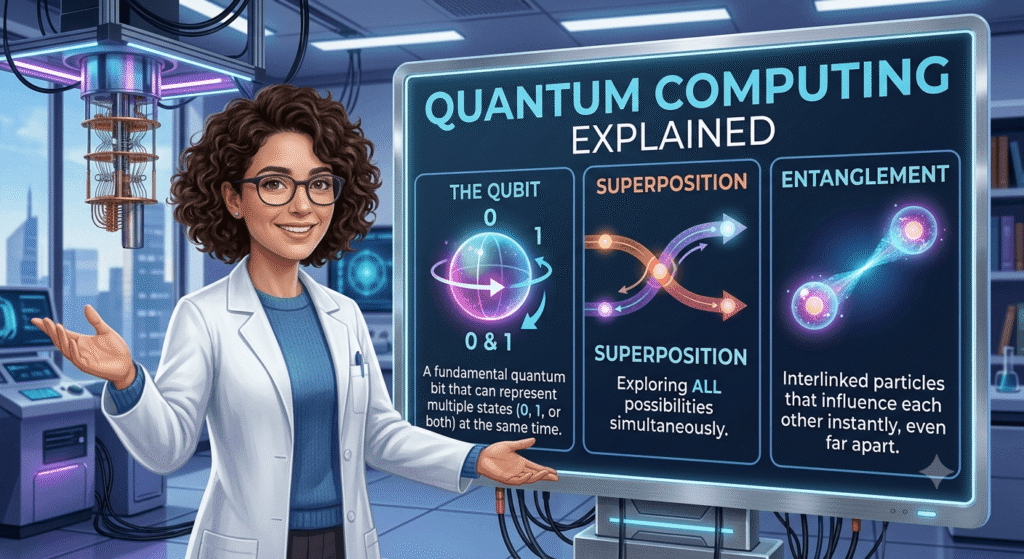
Quantum Computing in Simple Words
Introduction
Quantum Computing Explained is one of the most searched technology topics today, yet many people find it confusing. Terms like qubits, superposition, and quantum mechanics often sound highly technical. However, the basic idea behind quantum computing can be understood without a physics degree.
As technology continues to evolve, quantum computers are expected to solve problems that traditional computers struggle with. From healthcare and cybersecurity to finance and scientific research, quantum technology could transform entire industries.
In this beginner-friendly guide, we’ll explain quantum computing in simple words, explore how it works, discuss its benefits, and examine why businesses, researchers, and technology leaders are paying close attention to this groundbreaking innovation.
Table of Contents
- Introduction
- Why Quantum Computing Matters
- What Is Quantum Computing?
- How Quantum Computers Work
- Quantum Computing vs Classical Computing
- Benefits of Quantum Computing
- Real-World Applications
- Best Practices for Understanding Quantum Technology
- Common Mistakes to Avoid
- Practical Quantum Computing Checklist
- Call to Action
- FAQ
- Conclusion
Why Quantum Computing Matters
Technology has advanced dramatically over the last few decades. Traditional computers have become faster and more powerful, but they still face limitations when solving highly complex problems.
Quantum computing matters because it has the potential to:
- Accelerate scientific discoveries
- Improve artificial intelligence systems
- Optimize supply chains
- Strengthen cybersecurity
- Develop new medicines faster
- Solve mathematical problems beyond current capabilities.
Governments, universities, and technology companies across the USA, Canada, Europe, and the UK are investing billions of dollars into quantum research because of its enormous future potential.
Quantum Computing : What Is It?
At its core, it is a new way of processing information.
Traditional computers use bits.
A bit can only be:
- 0
- 1
Everything on your laptop, smartphone, or tablet is built using combinations of these two values.
Quantum computers use something called qubits.
Unlike regular bits, qubits can exist as:
- 0
- 1
Both 0 and 1 at the same time
This unique property allows quantum computers to process enormous amounts of information simultaneously.
Think of a traditional bit like a light switch:
Off = 0
On = 1
A qubit is more like a dimmer switch that can exist in multiple states at once.
This capability creates entirely new possibilities for computing power.
How Quantum Computers Work
To understand quantum computing, it’s helpful to know three key concepts.
1. Qubits
Qubits are the building blocks of quantum computers.
Instead of storing a single value, qubits can represent multiple possibilities simultaneously.
This allows quantum systems to perform calculations much more efficiently for certain tasks.
2. Superposition
Superposition allows a qubit to exist in multiple states at the same time.
Imagine trying every possible route on a map simultaneously rather than testing one route at a time.
That’s essentially what superposition enables.
3. Entanglement
Entanglement creates a connection between qubits.
When one entangled qubit changes, another connected qubit responds instantly.
This phenomenon allows quantum computers to coordinate calculations in ways traditional computers cannot.
Quantum Computing vs Classical Computing
Classical Computing
- Uses bits
- Processes one possibility at a time
- Excellent for everyday tasks
- Mature technology
- Widely available
- Uses qubits
- Processes multiple possibilities simultaneously
- tasks
- Excellent for complex optimization
- Emerging technology
- Limited availability
Benefits of Quantum Computing
Quantum computing offers several potential advantages.
Faster problem solving
Complex calculations that could take traditional computers years might be completed much faster.
Improved Drug Discovery
Researchers can simulate molecular interactions more accurately.
This may lead to faster development of new medicines.
Better Artificial Intelligence
Quantum computing could help AI systems process large datasets
more efficiently.
Enhanced Financial Modeling
Financial institutions can use quantum systems to improve risk analysis and investment strategies.
Advanced Cybersecurity
Quantum technology may create stronger encryption methods while also challenging current security standards.
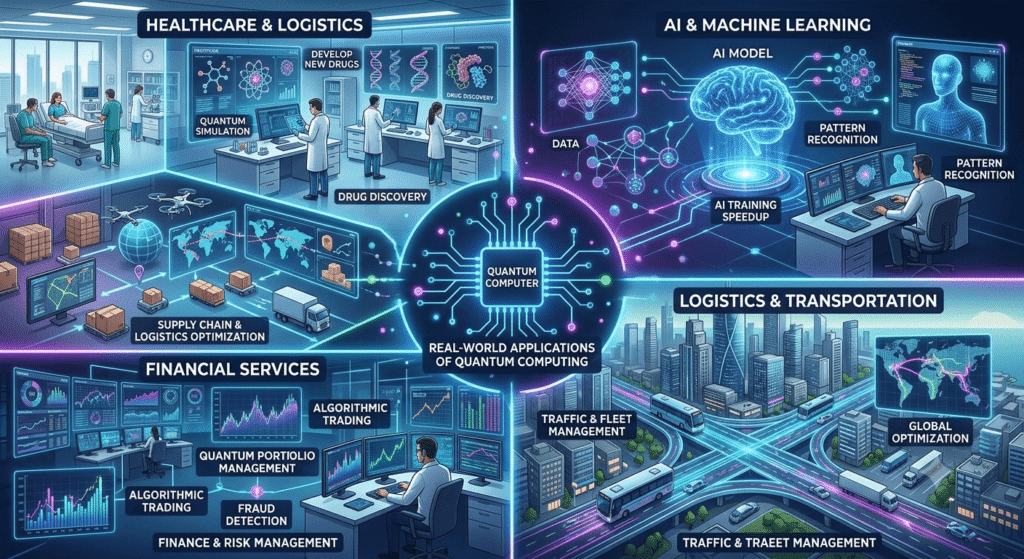
Real-World Applications of Quantum Computing
Although still developing, quantum computing is already being explored in several industries.
Healthcare
Scientists use quantum simulations to study proteins, diseases, and drug interactions.
Logistics and Transporation
Companies can optimize delivery routes, reduce fuel consumption, and improve efficiency.
Artificial Intelligence
Quantum-powered machine learning may significantly improve prediction accuracy.
Climate Research
Researchers can model environmental systems more accurately and develop better sustainability strategies.
Financial Services
Banks can improve fraud detection, portfolio optimization, and market forecasting.
Best Practices for Understanding Quantum Technology
If you’re new to quantum computing, follow these best practices:
Start with Fundamentals
Learn basic concepts such as:
- Bits
- Qubits
- Superposition
- Entanglement
- Focus on Applications
- Understanding practical uses often makes quantum concepts easier to grasp.
- Follow Trusted Sources
- Stay updated through reliable organizations.
Connect Quantum and AI
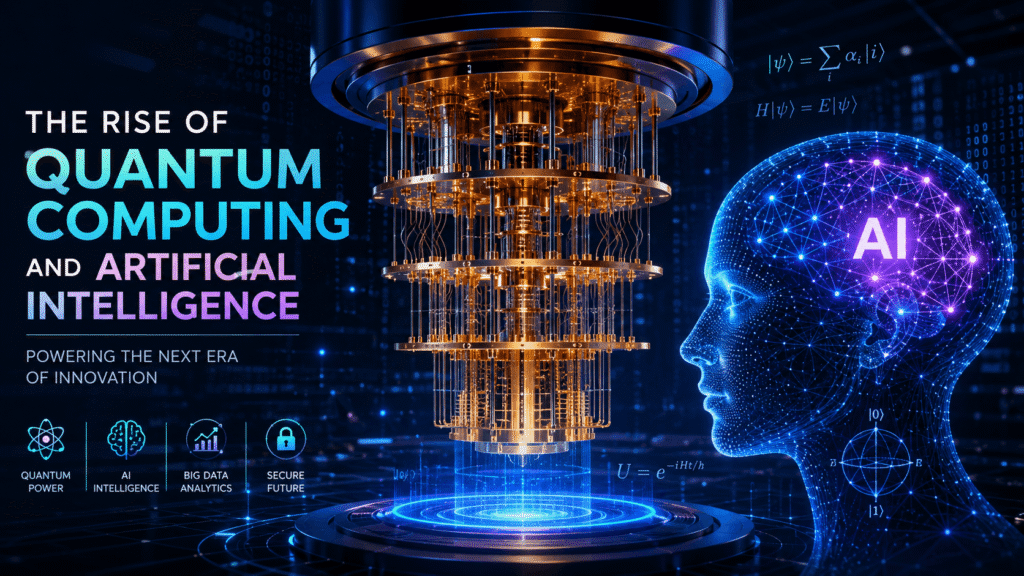
Quantum computing and artificial intelligence are increasingly interconnected.
Common Mistakes to Avoid
Many beginners misunderstand quantum computing.
Avoid these common mistakes:
- Believing Quantum Computers Will Replace All Computers
- Traditional computers remain essential.
- Quantum computers are designed for specific challenges.
- Expecting Immediate Adoption
- Quantum technology is still developing.
- Large-scale commercial adoption may take years.
- Ignoring Practical Limitations
Current quantum systems face challenges such as:
- Error rates
- Stability issues
- High operating costs
- Falling for Hype
- Not every business problem requires quantum computing.
- Organizations should evaluate realistic use cases.
Practical Quantum Computing Checklist
Use this checklist if you’re learning about quantum computing:
✔ Understand the difference between bits and qubits
✔ Learn the basics of superposition
✔ Learn the basics of entanglement
✔ Explore real-world applications
✔ Follow trusted research organizations
✔ Stay updated on industry developments
✔ Understand current limitations
✔ Explore connections between AI and quantum technology
✔ Evaluate business opportunities realistically
✔ Continue learning as the field evolves
Ready to Explore the Future of Technology?
Quantum computing is only one part of the technological revolution shaping the future.
Whether you’re a student, entrepreneur, business leader, or technology enthusiast, staying informed about emerging innovations can help you make smarter decisions and identify new opportunities.
Want to learn more about AI, quantum technology, and future innovations?
Explore more expert resources, subscribe for updates, or contact our team to discover how emerging technologies could impact your industry and business strategy.
Frequently Asked Questions (FAQ)
What is quantum computing in simple words?
Quantum computing is a new type of computing that uses qubits instead of traditional bits, allowing it to process multiple possibilities simultaneously.
Why is quantum computing important?
Quantum computing could solve highly complex problems faster than traditional computers, helping industries such as healthcare, finance, and artificial intelligence.
What are qubits?
Qubits are the basic units of information in quantum computers. Unlike regular bits, they can exist in multiple states at the same time.
Will quantum computers replace traditional computers?
No. Quantum computers are designed for specialized tasks, while traditional computers remain ideal for everyday computing needs.
When will quantum computing become mainstream?
Experts expect significant progress over the next decade, but widespread commercial adoption will likely happen gradually as technology matures.
Conclusion
Understanding Quantum Computing Explained in simple words helps demystify one of the most exciting technologies of our time. While quantum computing is still evolving, its potential to transform healthcare, artificial intelligence, finance, cybersecurity, and scientific research is enormous.
By learning the fundamentals of qubits, superposition, and entanglement, you can better understand how quantum technology may shape the future. As research continues and practical applications expand, quantum computing is likely to become a major driver of innovation across industries worldwide.
Staying informed today can help you prepare for tomorrow’s technological breakthroughs.

Hi There,
I came across your website and noticed you’re running a WordPress site — great setup.
I just wanted to reach out because we’ve been helping WordPress site owners like you reclaim hours every week by automating the repetitive stuff that quietly eats into your day:
WordPress automation — auto-publishing, content scheduling, plugin updates, backups, and form-to-CRM workflows
Chat automation — 24/7 AI chatbots that answer visitor questions, qualify leads, and book appointments while you sleep
Social media chat automation — auto-replies and DM flows across Instagram, Facebook, and WhatsApp so no lead goes cold
Lead follow-up sequences — instant responses the moment someone fills out a form or contacts you
Most of our clients save 10–15 hours a week within the first month.
We’d love to take a quick look at your current setup and tell you exactly where automation could make the biggest difference — no fluff, no hard sell.
Get your free 15-minute audit here →
Or just reply to this email and we can sort out a time.
WhatsApp works too: wa.link/45wwsq
Best,
Alex
AutoHandy Team
alex@autohandy.co
[Timestamp: 2026-07-04 16:34:55]
Thanks for your message Alex. I’m not looking for automation services at the moment, but I’ll keep you in mind for the future.