
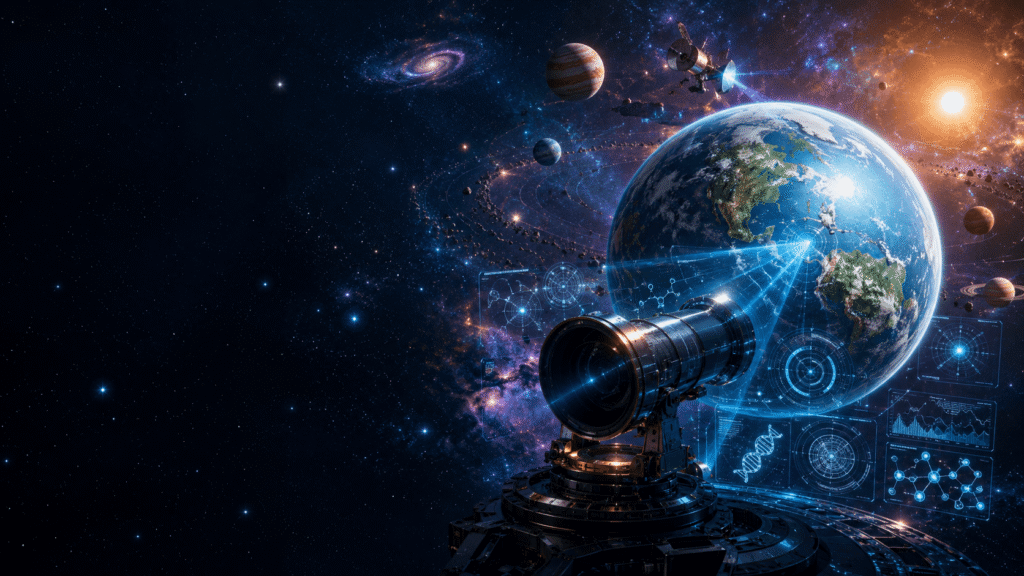
Can We Live on Other Planets? The Science, Challenges, and Future of Human Space Colonization
Introduction
Can We Live on Other Planets? This question has fascinated scientists, astronauts, and dreamers for generations. Thanks to rapid advances in space technology, artificial intelligence, and astronomy, the idea of humans living beyond Earth is no longer limited to science fiction.
Governments and private space companies are investing billions of dollars in missions that could eventually establish permanent settlements on other worlds. Mars is currently the leading candidate, but scientists are also studying the Moon and distant exoplanets that may support life.
Although exciting progress has been made, living on another planet involves overcoming enormous scientific, medical, engineering, and environmental challenges. This guide explores what researchers know today, what remains uncertain, and what the future may hold.
Table of Contents
- Why This Topic Matters
- What Does Living on Another Planet Mean?
- Which Planets Could Humans Live On?
- Why Mars Is the Best Candidate
- Can Humans Survive Outside Earth?
- Technologies Making Space Colonization Possible
- Benefits of Living on Other Planets
- Step-by-Step Path Toward Living on Other Planets
- Common Mistakes and Misconceptions
- Practical Checklist for Understanding Space Colonization
- Call to Action
- Frequently Asked Questions (FAQ)
- Conclusion
Why Can We Live on Other Planets Matters
Earth is currently the only known planet that naturally supports human life. However, our population continues to grow while climate change, resource shortages, and natural disasters remind us that relying on one planet carries risks.
- Exploring other planets could help humanity:
- Increase scientific knowledge
- Develop new technologies
- Protect civilization from global catastrophes
- Expand opportunities for future generations
- Discover whether life exists elsewhere in the universe
Many experts believe becoming a multi-planetary species could improve humanity’s long-term survival.
What Does Living on Another Planet Mean?
Living on another planet is much more than landing a spacecraft. A permanent settlement would need everything humans require for daily life.
Essential Requirements
A successful colony would need:
- Clean air
- Safe drinking water
- Food production
- Reliable energy
- Medical care
- Radiation protection
- Comfortable housing
- Communication with Earth
Scientists are working on technologies that could recycle water, produce oxygen, and grow crops in controlled environments.
Which Planets Could Humans Live On?
Not every planet is suitable for human life.
Mars
Mars is considered the most realistic destination because:
- It has water ice.
- Days are similar in length to Earth’s.
- It has seasons.
- Scientists understand it better than most planets.
The Moon
Although technically not a planet, the Moon may become humanity’s first long-term space base because it is much closer to Earth.
Venus
Venus has temperatures hot enough to melt lead and an atmosphere that is extremely hostile. Scientists have proposed floating habitats high above the surface, but this remains theoretical.
Exoplanets
Thousands of planets outside our solar system have been discovered. Some lie within the “habitable zone,” where temperatures might allow liquid water. However, these planets are many light-years away, making travel impossible with current technology.
Why Mars Is the Best Candidate for Human Colonization?
Mars receives more attention than any other destination.
Scientists believe it offers the greatest chance of supporting future human settlements because several key resources already exist there.
Water Ice
Frozen water beneath the Martian surface could provide:
- Drinking water
- Oxygen
- Hydrogen fuel
Local Resources
Instead of transporting everything from Earth, future astronauts may use Martian soil to build structures through advanced 3D printing techniques.
Solar Energy
Although Mars receives less sunlight than Earth, solar panels could still provide electricity for habitats and research stations.
Example: Future missions may create self-sustaining research bases where astronauts recycle nearly every resource.
Can Humans Survive Outside Earth?
Humans evolved under Earth’s unique conditions. Living elsewhere introduces serious health risks.
Radiation
Without Earth’s magnetic field, astronauts receive much higher levels of cosmic radiation, increasing long-term health risks.
Low Gravity
Mars has only about 38% of Earth’s gravity. Extended exposure may weaken muscles and bones.
Mental Health
Living in isolated habitats millions of kilometers from Earth could affect emotional well-being. Future colonies will require psychological support alongside physical healthcare.
Technologies Making Space Colonization Possible Life on Other Planets
Several emerging technologies are bringing humanity closer to living beyond Earth.
Artificial Intelligence
AI can monitor spacecraft, optimize life-support systems, and assist astronauts with routine operations.
Robotics
Robots may build habitats before humans arrive, reducing risks and costs.
3D Printing
Future missions could manufacture tools, spare parts, and even homes using local materials instead of transporting everything from Earth.
Closed-Loop Life Support
Advanced recycling systems can purify water, recycle air, and reduce waste, making long-term missions more sustainable.
Benefits of Living on Other Planets Or Life on Other Planets
If humans successfully establish settlements beyond Earth, the advantages could extend far beyond space exploration. Living on other planets could transform science, technology, and the future of civilization.
Protecting Humanity’s Future
One of the strongest arguments for space colonization is ensuring the long-term survival of humanity. Natural disasters, asteroid impacts, pandemics, or environmental changes could threaten life on Earth. Having self-sustaining colonies on other worlds would provide an additional layer of security.
Scientific Discoveries
Human settlements on Mars or other celestial bodies would allow scientists to study planetary evolution, climate, geology, and the possibility of ancient or present microbial life. These discoveries could reshape our understanding of the universe.
Technological Innovation
Many technologies developed for space missions eventually improve life on Earth. Advances in renewable energy, robotics, AI, medical equipment, water purification, and food production often begin with space research before finding everyday applications.
Economic Opportunities
As the space industry grows, new careers will emerge in engineering, software development, manufacturing, mining, medicine, agriculture, education, and tourism. Companies investing in space technology could create thousands of high-skilled jobs.
Step-by-Step Path Toward Living on Other Planets Or Life on Other Planets
Building a permanent human settlement will not happen overnight. Scientists expect progress to occur gradually over several decades.
Step 1: Continue Robotic Exploration
Robotic missions gather valuable information about planetary environments before humans arrive. They identify water sources, analyze soil, and test landing sites.
Step 2: Establish Lunar Bases
The Moon can serve as a testing ground for technologies needed for deeper space missions, including habitat construction and life-support systems.
Step 3: Send Long-Term Human Missions to Mars
Future astronauts will spend months or even years living on Mars while testing methods to produce food, recycle water, and generate oxygen.
Step 4: Build Permanent Habitats
Using local materials, astronauts may construct durable habitats capable of protecting residents from radiation, dust storms, and extreme temperatures.
Step 5: Develop Self-Sustaining Colonies
The ultimate goal is to create settlements that produce their own food, water, oxygen, and energy with minimal dependence on Earth.
Common Mistakes and Misconceptions
Many people misunderstand what living on another planet would actually involve.
Mistake 1: Mars Is Already Habitable
Mars has no breathable atmosphere, extremely low temperatures, and dangerous radiation. Humans cannot survive there without advanced life-support systems.
Mistake 2: We Will Colonize Other Planets Soon
Although technology is advancing rapidly, permanent human colonies are still years or decades away.
Mistake 3: Space Travel Is Easy Life on Other Planets
Traveling millions of kilometers through space presents significant engineering, medical, and financial challenges.
Mistake 4: We Have Found Another Earth Life on Other Planets
Scientists have discovered many promising exoplanets, but none have been confirmed as Earth-like enough for human settlement.
Practical Checklist for Understanding Space Colonization Of Life on Other Planets
Use this checklist to better understand whether humans can realistically live beyond Earth:
✔️ Learn about Mars and lunar missions.
✔️ Follow developments in reusable rockets.
✔️ Understand life-support technologies.
✔️ Explore the role of artificial intelligence in space exploration.
✔️ Stay updated on NASA and ESA discoveries.
✔️ Learn how sustainable habitats may work.
✔️ Understand the challenges of radiation and low gravity.
Call to Action
The future of space exploration is advancing faster than ever. At Future Science AI, we simplify complex scientific topics into practical, engaging content that keeps you informed about emerging technologies and discoveries.
Whether you’re interested in artificial intelligence, quantum computing, robotics, or the future of humanity in space, explore our latest articles and stay ahead of tomorrow’s innovations.
Start exploring today and discover how science and technology are shaping the future of life beyond Earth.
Frequently Asked Questions (FAQ)
1. Can we live on other planets today?
No. Humans cannot permanently live on other planets with today’s technology. However, scientists are developing systems that may make long-term settlements possible in the future.
2. Why is Mars considered the best planet for humans?
Mars has water ice, a day length similar to Earth’s, and resources that may help support future human colonies.
3. How long would it take to reach Mars?
Depending on the positions of Earth and Mars, a mission typically takes around six to nine months using current spacecraft technology.
4. Could humans breathe on Mars?
No. Mars has a very thin atmosphere made mostly of carbon dioxide. Humans would need pressurized habitats and oxygen supplies.
5. Will humans live on other planets in this century?
Many scientists believe humans may establish small research bases on the Moon or Mars during this century, but large self-sustaining cities remain uncertain.
Conclusion
So, can we live on other planets? The answer is not yet—but the possibility is becoming more realistic every year. Advances in reusable rockets, artificial intelligence, robotics, life-support systems, and planetary research are bringing humanity closer to becoming a multi-planetary species.
Significant obstacles remain, including radiation exposure, limited resources, and the need for sustainable habitats. Even so, ongoing missions by NASA, ESA, and private space companies continue to push the boundaries of what is possible.
The coming decades may mark the beginning of a new era in human history—one in which living beyond Earth is no longer a dream but a scientific reality. By staying informed and supporting innovation, we can all witness one of humanity’s greatest adventures.